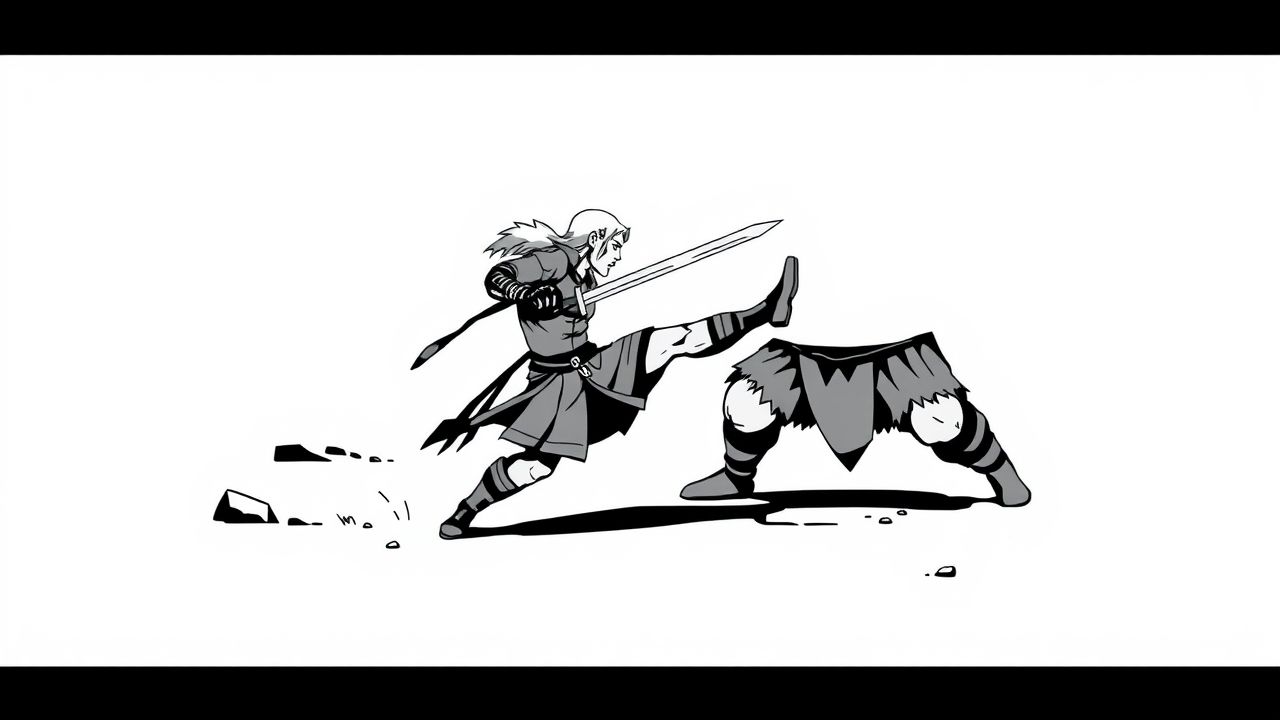
One of the more memorable and controversial moments in The Witcher series, both in the books and video games, is when Geralt of Rivia breaks Sigismund Dijkstra’s leg. This incident is not just an act of physical violence; it represents a deeper clash between ideals, methods, and allegiances. The Witcher universe, with all its political intrigue and morally gray decisions, builds characters like Dijkstra and Geralt who often find themselves at odds, even when on the same side. The leg-breaking event marks a turning point in their relationship and underscores the complexity of power, trust, and betrayal in a world ruled by survival and ambition.
Who is Sigismund Dijkstra?
Sigismund Dijkstra is the former head of Redania’s secret service, a man known for his brilliant mind, strategic thinking, and ruthless efficiency. Unlike sorcerers or warriors, Dijkstra uses politics and espionage as his tools. Despite lacking magical or combat prowess, his intelligence places him among the most dangerous figures in the Northern Kingdoms. Dijkstra is not a villain in the traditional sense, but he does prioritize order and political control over sentimentality or heroism.
Key Traits of Dijkstra
- Former spymaster of Redania
- Extremely pragmatic and manipulative
- Prefers control through information rather than brute force
- Has a contentious relationship with Geralt and the Lodge of Sorceresses
Dijkstra’s desire to see a strong, centralized power in the North often brings him into conflict with those who value individual freedom or less authoritarian methods. That includes Geralt, who generally avoids politics unless forced into action by circumstances.
The Conflict Between Geralt and Dijkstra
The relationship between Geralt and Dijkstra is one of mutual distrust. Although they sometimes work together toward similar goals, such as protecting Ciri or destabilizing Nilfgaard, their motivations and values differ sharply. Geralt acts based on his moral compass and personal loyalty, while Dijkstra values strategy and outcome, often at the cost of human lives or personal relationships.
Political Tensions
In The Witcher 3: Wild Hunt, these tensions come to a head during the questline involving King Radovid. Dijkstra plans to take over Redania after Radovid’s death, envisioning a rational and structured regime. However, he does not trust Geralt or Vernon Roche, both of whom have personal ties and loyalties that could disrupt his vision for the kingdom.
This conflict is particularly noticeable during the Reason of State quest, where Dijkstra proposes eliminating his former allies to ensure his rise to power. When Geralt refuses to stand aside or allow such a betrayal, the situation escalates violently.
Geralt Breaks Dijkstra’s Leg The Incident
In a dramatic showdown, Dijkstra attempts to seize control by force. He arrives with his guards to ambush Roche, Ves, and Thaler after Radovid’s assassination. Geralt, caught in the middle, is forced to choose whether to support Dijkstra’s power grab or defend his companions. Choosing to side with Roche and the others leads to a cinematic scene where Geralt intervenes directly.
The Fight
- Dijkstra threatens to kill Roche and Thaler.
- Geralt blocks his path and issues a warning.
- Dijkstra refuses to back down, prompting Geralt to act.
- Geralt breaks Dijkstra’s leg, disabling him and ending the confrontation.
This moment is symbolic. By breaking Dijkstra’s leg, Geralt not only stops a potential civil war among the Northern rebels but also metaphorically breaks Dijkstra’s ambition to rise as a new autocrat. It is a brutal reminder that raw power whether through violence or politics can be opposed when it endangers others.
Consequences of the Leg-Breaking
This event has significant narrative consequences. For Dijkstra, it marks the end of his political aspirations in that timeline. He is humiliated, injured, and effectively removed from the power struggle. For Geralt, the moment reinforces his loyalty to individuals over grand schemes. It also cements his unwillingness to compromise when his friends are threatened.
Story Impact
- Prevents Dijkstra from taking control of Redania
- Keeps Roche, Ves, and Thaler alive and politically active
- Possibly alters the fate of the North depending on the player’s choices
In broader terms, it’s one of the few moments in The Witcher 3 where players must choose between calculated governance and personal loyalty. The game doesn’t present one option as strictly good or bad it simply offers consequences that ripple through the narrative.
Symbolism and Moral Ambiguity
The moment Geralt breaks Dijkstra’s leg is laden with symbolic meaning. It shows that power gained through manipulation and betrayal, even with noble intentions, can be brought down by someone unwilling to play those games. It also highlights the recurring theme in The Witcher series: that there are rarely clean or easy choices, only decisions made in the moment based on instinct and principle.
Geralt’s Ethics
Throughout the series, Geralt tries to remain neutral, but he is often pulled into situations that force him to take a stand. He values personal freedom, loyalty, and justice on an individual level. Dijkstra, on the other hand, values stability and order, even if it means sacrificing individuals. Their conflict is a clash of ideologies as much as it is a personal confrontation.
Legacy and Fan Reaction
Among fans of the series, the scene where Geralt breaks Dijkstra’s leg is iconic. Some players sympathize with Dijkstra’s vision for a stronger North, while others appreciate Geralt’s refusal to sacrifice his friends. The moment has become a point of discussion and debate, showing how rich and emotionally complex the world of The Witcher is.
Memorable for Several Reasons
- One of the game’s most dramatic and personal turning points
- Highlights Geralt’s moral compass and fierce protectiveness
- Alters the political future of the Northern Kingdoms
- Shows that even non-magical characters can wield immense influence
Whether players agree with Geralt’s actions or not, the event is a testament to the quality of storytelling in The Witcher 3, where choices carry weight and characters have deep, sometimes conflicting motivations.
When Geralt breaks Dijkstra’s leg, it is far more than just a physical act it is a declaration of values. It is Geralt choosing friendship over power, loyalty over ambition, and integrity over strategy. The moment is unforgettable not because it is flashy or brutal, but because it encapsulates the moral heart of the series. Dijkstra’s downfall serves as a reminder that cunning alone cannot always triumph, especially when it underestimates the strength of those who fight for more than politics. It’s a powerful scene that resonates with anyone who values character over calculation.