Understanding how people learn is essential in both education and professional development. The Kolb Learning Style Inventory (LSI) is one of the most recognized tools for assessing individual learning preferences. Developed by David A. Kolb, this inventory provides valuable insight into the way people absorb, process, and retain information. By identifying specific learning styles, educators, trainers, and learners themselves can adjust methods and strategies to maximize effectiveness. The Kolb LSI is rooted in experiential learning theory, which emphasizes the role of experience in the learning process. This topic explores the Kolb Learning Style Inventory in depth, explaining its structure, purpose, and applications in various settings.
What Is the Kolb Learning Style Inventory?
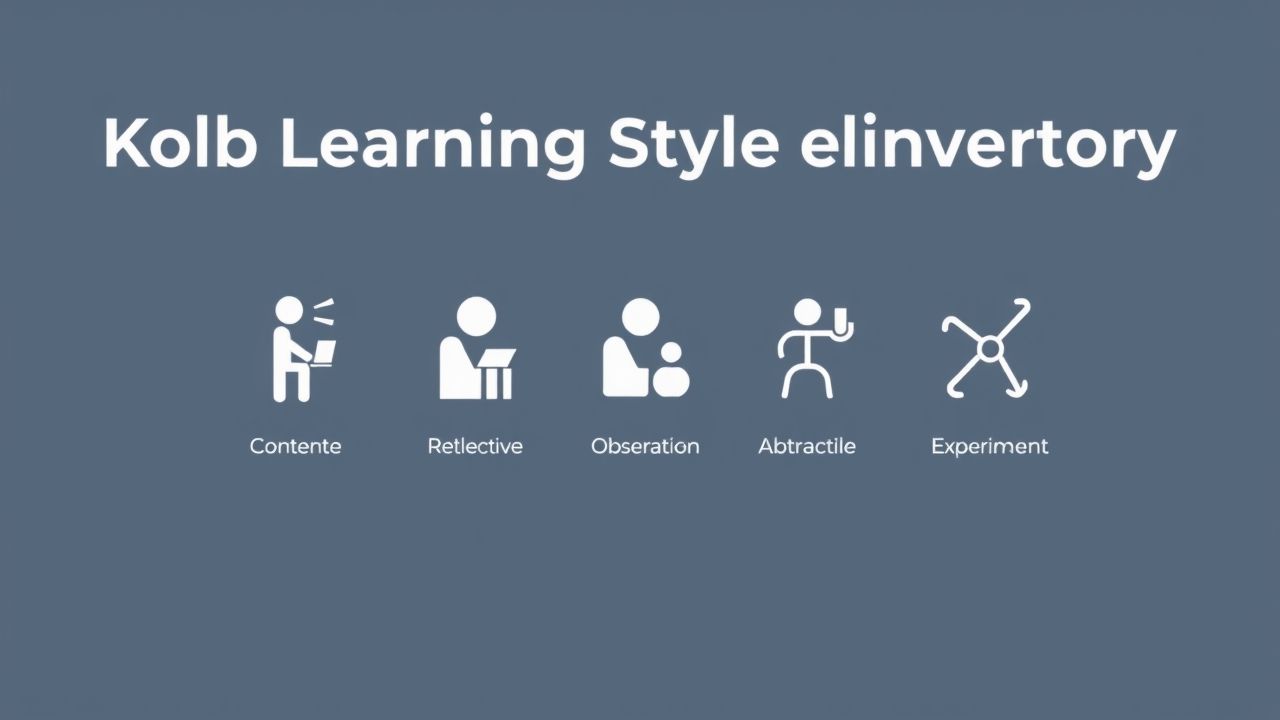
The Kolb Learning Style Inventory is a self-assessment tool designed to help individuals understand their personal learning style. It is based on Kolb’s Experiential Learning Theory (ELT), which suggests that learning is a continuous process grounded in experience. According to Kolb, effective learning occurs when a person progresses through a cycle involving four stages:
- Concrete Experience (CE)
- Reflective Observation (RO)
- Abstract Conceptualization (AC)
- Active Experimentation (AE)
Each learner tends to favor particular stages of this cycle, which defines their learning style. The Kolb Learning Style Inventory evaluates individual preferences and classifies them into one of four learning styles derived from these stages.
The Four Kolb Learning Styles
Diverging (CE/RO)
Learners with a diverging style are best at viewing situations from multiple perspectives. They are sensitive, emotional, and prefer to watch rather than do. These individuals enjoy gathering information, brainstorming, and working in groups. Creative arts and social science students often fall into this category.
Assimilating (AC/RO)
The assimilating learning style values ideas and abstract concepts more than people. Learners with this style prefer clear explanations over practical opportunity. They are logical, organized, and prefer working with theoretical models and systems. Science and mathematics students often exhibit this learning preference.
Converging (AC/AE)
Converging learners solve problems and apply their learning to practical issues. They excel in technical tasks and are less concerned with interpersonal aspects. These learners prefer tasks with clear solutions and often pursue careers in engineering or technology.
Accommodating (CE/AE)
Accommodating learners are hands-on and rely on intuition rather than logic. They enjoy new challenges and experiences and are willing to take risks. These individuals prefer to work in teams and learn through trial and error. Many business and marketing professionals have this style.
Structure of the Kolb Learning Style Inventory
The Kolb LSI typically consists of a series of statements that individuals rate according to how well each describes their learning preferences. The responses are then scored and plotted on a grid that aligns with Kolb’s four learning styles. This diagnostic approach allows individuals to identify not only their dominant style but also the relative balance of the other styles within their learning profile.
Version Updates
The Kolb Learning Style Inventory has gone through several updates over the years. Each version reflects ongoing research and refinement in experiential learning theory. The most current version, LSI 4.0, includes expanded dimensions and improved accuracy in determining individual learning profiles.
Applications in Education
Understanding learning styles can be transformative in the classroom. Teachers can design lessons that incorporate various approaches, ensuring all students are engaged. For instance, a biology teacher might combine lectures (for assimilating learners), lab experiments (for accommodating learners), group discussions (for diverging learners), and problem-solving activities (for converging learners). Such diversity in teaching strategy ensures that each student’s learning preference is acknowledged.
Additionally, the Kolb LSI can help students become more aware of their strengths and weaknesses. When learners understand how they learn best, they can tailor their study habits accordingly. For example, an accommodating learner might benefit from hands-on practice and simulations, while an assimilating learner might prefer reading and theoretical exploration.
Corporate and Professional Development Use
The Kolb Learning Style Inventory is also widely used in professional training environments. Employers and trainers use it to create personalized development plans that align with an employee’s learning preferences. This leads to more efficient training programs and better skill retention.
For example, a sales team might consist of individuals with different learning styles. A trainer aware of these styles might use storytelling and roleplay for accommodating learners, data analysis for assimilating learners, scenario-based problem-solving for converging learners, and open discussions for diverging learners. By doing so, the trainer ensures each team member engages with the material effectively.
Benefits of the Kolb LSI
- Improved self-awareness: Learners gain insight into how they prefer to learn.
- Enhanced teaching and training methods: Educators can cater to a diverse group of learners.
- Better communication: Understanding others’ learning styles can improve team collaboration.
- Customized learning plans: Study techniques and training strategies can be tailored to individual needs.
Limitations and Criticisms
While the Kolb Learning Style Inventory has many applications, it is not without criticisms. Some researchers argue that learning styles are too simplistic and do not account for the complexity of human learning. Others believe that labeling learners may lead to fixed mindsets, where individuals believe they cannot learn effectively in other ways.
Despite these concerns, the Kolb LSI remains a valuable tool when used appropriately. It should be viewed as a guide rather than a strict categorization. Encouraging learners to explore and develop other styles can lead to a more flexible and holistic approach to education and training.
Kolb Learning Inventory and Personal Growth
In addition to formal education and professional training, the Kolb Learning Style Inventory can support lifelong learning. Self-directed learners can use the inventory to better understand their habits and challenge themselves to grow. For example, a person who heavily favors the concrete experience stage might consciously engage more with abstract reasoning tasks to expand their skill set.
Self-improvement books, online courses, and even hobbies can be approached through the lens of experiential learning. Understanding one’s learning cycle can help create better routines, set realistic goals, and remain motivated throughout the process.
The Kolb Learning Style Inventory offers a practical framework for understanding individual learning preferences. By identifying whether someone is a diverging, assimilating, converging, or accommodating learner, both individuals and educators can create more effective strategies for absorbing and applying knowledge. While it is important to be mindful of its limitations, the Kolb LSI continues to be a powerful tool in education, corporate training, and personal development. Embracing its insights leads to a more dynamic, responsive, and personalized approach to learning in all areas of life.