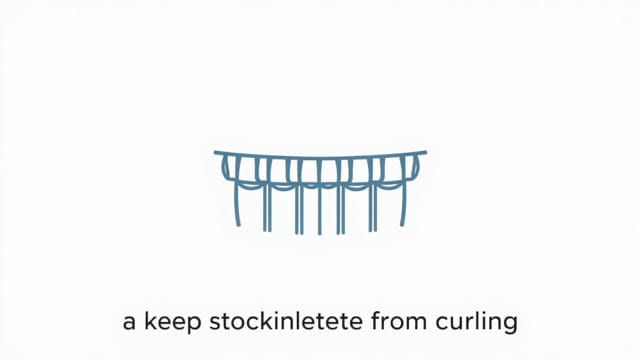
When working with stockinette stitch in knitting, one of the most common frustrations is its tendency to curl. This issue affects both beginners and experienced knitters alike. You may have finished a beautiful project only to find that the edges roll inward, making it difficult to block, seam, or wear. Understanding why stockinette curls and how to prevent or minimize this natural behavior is key to achieving a polished and professional look in your knitting. Fortunately, there are several effective techniques to keep stockinette from curling, whether through stitch variation, structural reinforcement, or careful finishing methods.
Why Stockinette Stitch Curls
The curling of stockinette stitch is not a flaw in technique it’s simply a natural outcome of its structure. The stitch consists of knit stitches on the right side and purl stitches on the wrong side. These two types of stitches create an imbalance in tension: knit stitches pull the fabric forward while purl stitches push it back. As a result, the edges begin to curl toward the knit side both horizontally and vertically.
Physics of Curling
Each row of knitting forms loops that want to pull in different directions depending on the stitch type. Since the tension is uneven, the edges of the stockinette fabric have no opposing force to keep them flat, resulting in curling inward on all sides. This is especially noticeable on flat pieces like scarves or panels where there are no seams to hold the fabric in place.
Techniques to Prevent Curling
There’s no one-size-fits-all solution, but there are several strategies that knitters use to keep stockinette from curling. Depending on your project, you may use one or a combination of the following methods to achieve a flat, balanced result.
1. Add a Border
One of the easiest and most effective ways to prevent curling is by adding a border using a non-curling stitch. Ribbing, garter stitch, seed stitch, or moss stitch are popular choices. These stitches are balanced, meaning they use equal knit and purl stitches across a row, creating stability that counteracts the curl.
- Garter stitch border: Knit every row for 46 rows at the beginning and end, and 46 stitches at each edge.
- Ribbed border: Use a 1×1 or 2×2 rib for a more fitted, elastic edge.
- Seed stitch: Alternate knit and purl stitches every stitch and every row for a textured and decorative look.
2. Block Your Work
Blocking is the process of wetting or steaming your finished piece and shaping it into the desired dimensions while drying. While blocking can’t completely stop stockinette from curling, it can help relax the fibers and reduce the severity of the roll.
- Wet blocking: Soak the piece in cool water, squeeze out the excess water gently, and pin it flat to a blocking mat.
- Steam blocking: Hold a steam iron slightly above the fabric (without touching it) and allow the heat to relax the stitches before pinning it down to cool.
Blocking works best with natural fibers like wool, alpaca, or cotton, as they respond better to moisture and heat.
3. Use a Heavier Yarn or Larger Needles
Sometimes switching to a heavier yarn or using larger needles can alter the fabric’s drape enough to reduce curling. Thicker yarn can provide more weight, which pulls the fabric down and helps keep the edges flatter. However, this method is more of a supplementary solution and may not work on its own for small projects like swatches or narrow scarves.
4. Combine with Other Stitch Patterns
If your design allows it, consider mixing stockinette stitch with other patterns. Adding texture not only enhances visual appeal but also helps balance tension. Horizontal stripes of garter or seed stitch within the body of the piece can break up the curling tendency and add stability.
5. Knit in the Round
When you knit in the round, stockinette stitch is achieved by knitting every round, without purling. Interestingly, circular stockinette does not curl in the same way as flat stockinette because there are no exposed edges to roll. This method is ideal for hats, cowls, and sleeves where curling is less of a concern.
Finishing Techniques to Combat Curl
Even with careful planning, curling may still occur. Here are some finishing touches that can help reinforce your edges and give your project a tidy finish.
6. Sew in a Lining or Facing
For garments or accessories like scarves, you can add a fabric lining or knitted facing to the edges. This acts as a stabilizer and adds structure, keeping the fabric from rolling. Although it requires more effort, the result is a neatly finished piece that holds its shape.
7. Crochet Edging
A single crochet or reverse single crochet border can be added after the knitting is done. This not only adds an aesthetic touch but also helps straighten the curling edge. It’s especially useful for blankets, washcloths, or decorative panels.
8. Sew to a Stable Fabric
If the stockinette panel is part of a larger mixed-media project, you can sew it directly to a piece of canvas, felt, or another fabric. This creates a permanent anchor that eliminates curling entirely. It’s a good solution for wall art, pillows, or embellishments.
When Curling Might Be Okay
Sometimes, letting stockinette curl naturally can be part of the design. Rolled edges can add softness and casual elegance to cowls, wrist warmers, or baby hats. In these cases, the roll becomes a decorative element, and no intervention is needed.
Designing with Curl in Mind
If you decide to embrace the curl, make sure to plan for it in your measurements. The curling can shorten the visible length and pull in the width of your piece, so knitting extra rows or stitches may be necessary to achieve the desired final size.
Mastering Stockinette Stitch
Learning how to keep stockinette from curling is a valuable skill that improves the quality and professionalism of your knitting projects. Whether you choose to add borders, block your work, or embrace the curl as a design feature, the key is understanding the stitch’s natural tendencies and working with them instead of against them. With the right techniques and a bit of planning, your stockinette creations can be just as smooth and flat as you envision. Let your creativity guide you, and don’t let curling edges get in the way of your knitting confidence.