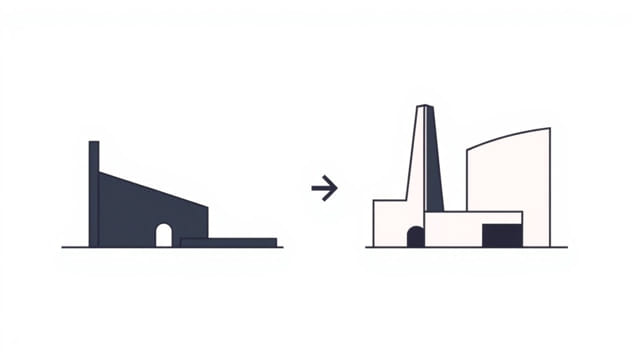
In the decades following World War II, the world underwent dramatic transformations that reshaped global politics, economics, art, and culture. The shift from a postwar order rooted in reconstruction, industrial growth, and ideological rivalry to a postmodern era marked by fragmentation, individualism, and cultural pluralism was neither swift nor simple. This evolution reflected deep changes in how societies understood identity, truth, power, and reality. Examining the transition from postwar to postmodern offers insight into the historical forces that shaped contemporary life and the intellectual movements that redefined our worldview.
Postwar Era: The Age of Reconstruction and Modernism
Political Realignments
After World War II, global powers were reorganized around two superpowers: the United States and the Soviet Union. The Cold War defined international relations for nearly half a century, leading to military alliances like NATO and the Warsaw Pact. Decolonization swept through Africa, Asia, and the Middle East, creating newly independent nations and shifting global dynamics.
Economic Recovery and Expansion
In the West, particularly the United States and Western Europe, the postwar period brought economic prosperity. Programs like the Marshall Plan helped rebuild war-torn regions. Technological advances, mass production, and consumerism fueled growth and a rising middle class.
- Mass production and industrialization continued to dominate economies.
- Suburbanization changed lifestyles and social structures.
- Welfare states emerged to address social needs and ensure stability.
Modernist Ideals in Culture
Modernism remained the dominant intellectual and artistic framework in the early postwar years. It emphasized rationality, progress, and universal truths. In architecture, this was reflected in functional designs like the International Style. In literature and art, modernism explored alienation, fragmentation, and innovation but still sought coherence and meaning.
Seeds of Change: The 1960s and 1970s
Social Movements
The 1960s marked a turning point. Across the world, people challenged authority, tradition, and the status quo. The Civil Rights Movement in the U.S., May 1968 protests in France, and anti-war demonstrations globally reflected a growing skepticism toward institutions and norms.
Rise of Identity Politics
Marginalized groups began asserting their voices. Feminism, Black Power, LGBTQ+ rights, and indigenous movements emerged with powerful critiques of exclusion and inequality. These movements challenged the universality claimed by modernist ideologies and introduced new ways of understanding history and society.
Philosophical Shifts
Thinkers like Michel Foucault, Jacques Derrida, and Jean-François Lyotard questioned the idea of objective truth, stable meaning, and linear progress. They laid the groundwork for postmodern thought, which emphasized multiplicity, power relations, and the constructed nature of reality.
Postmodernism Defined
Core Characteristics
Postmodernism is not a single theory but a broad cultural and intellectual movement that gained prominence in the late 20th century. It is characterized by skepticism toward grand narratives and ideologies, a focus on language and representation, and a celebration of diversity and ambiguity.
- Truth is seen as relative and culturally constructed.
- Reality is mediated through language, images, and symbols.
- Metanarratives, like Enlightenment or Marxist histories, are questioned or rejected.
Art and Architecture
In visual culture, postmodernism replaced the minimalism and order of modernism with eclecticism, irony, and playfulness. Architecture embraced ornament, historical reference, and complexity epitomized by figures like Robert Venturi and buildings that merged past and present styles.
Literature and Media
Postmodern literature employed techniques like metafiction, intertextuality, and fragmentation. Authors such as Thomas Pynchon and Don DeLillo blurred the line between reality and fiction. Mass media, advertising, and television became central in shaping cultural perception, a theme explored by theorists like Jean Baudrillard.
Postmodernism and Globalization
From Local to Global
As the Cold War ended, globalization accelerated. Technology connected people across the world, economies became interdependent, and cultural exchange intensified. Postmodernism both responded to and influenced this shift by breaking down rigid cultural boundaries and highlighting hybridity.
Consumer Culture and Hyperreality
Postmodern thinkers argued that in a media-saturated world, simulations and representations became more real than reality itself a concept Baudrillard called hyperreality. Branding, celebrity culture, and digital media transformed how people constructed identity and meaning.
Critiques and Controversies
Political and Ethical Concerns
Critics of postmodernism argue that its skepticism can lead to moral relativism and political paralysis. If all truths are seen as constructed, can justice or ethical standards still be meaningfully upheld? Others worry that postmodern detachment trivializes serious social issues.
Defense of Postmodern Thought
Defenders maintain that postmodernism reveals the limitations of dominant narratives and empowers marginalized voices. It promotes critical thinking by challenging taken-for-granted assumptions and encouraging pluralism in politics, culture, and scholarship.
Legacy and Contemporary Relevance
Enduring Influence
Although some claim postmodernism is now in decline, its impact continues to shape contemporary debates in academia, art, and public discourse. Terms like post-truth and fake news reflect ongoing concerns about truth, authority, and media in a postmodern context.
The Digital Age
The internet and social media have amplified postmodern themes of fragmentation, decentralization, and the questioning of authority. In the digital world, identity is fluid, narratives are endless, and knowledge is contested and democratized.
Understanding the Transition
The journey from the postwar period to the postmodern era is one of rupture and continuity. It reflects the evolving responses of societies to trauma, change, and complexity. While the postwar era was marked by rebuilding, modernist ideals, and clear ideologies, the postmodern turn introduced ambiguity, multiplicity, and a critical lens on power and truth. Understanding this historical trajectory not only helps explain contemporary culture and politics but also reminds us of the importance of adaptation in a rapidly changing world.