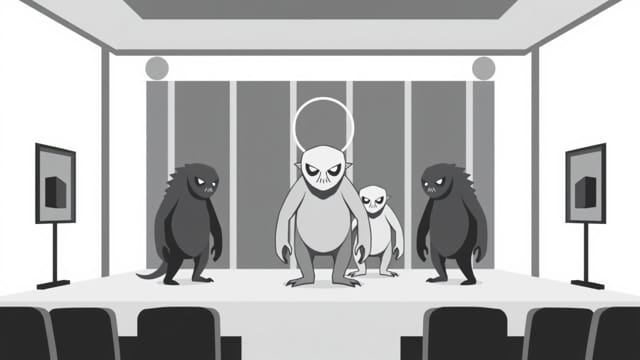
For decades, stories of mysterious creatures that walk like humans but are anything but ordinary have fascinated both believers and skeptics. From the dense forests of North America to the icy expanses of the Himalayas, eyewitnesses have reported encounters with ape-like beings that defy scientific explanation. One of the most intriguing resources on this topic is Manlike Monsters on Trial, a comprehensive examination of these reports, written with the lens of both folklore and forensic analysis. This work digs deep into the phenomenon of manlike monsters creatures such as Bigfoot, Yeti, and other humanoid cryptids and treats their appearances and the public reactions to them as a kind of cultural trial. The document, often sought in PDF format by enthusiasts, is more than just a catalog of sightings. It is a critical look at the evidence, the psychology of belief, and how societies process the unknown.
Understanding the Concept of Manlike Monsters
Defining the Creature
Manlike monsters, often referred to as hominid cryptids, are creatures reported to resemble humans or apes but do not fit into known species classifications. These beings are typically large, bipedal, hairy, and elusive. They are usually associated with remote areas, making them difficult to track and scientifically verify. Despite the lack of physical proof, sightings continue to occur across the globe, with the most famous examples including:
- Bigfoot (North America)
- Yeti (Himalayas)
- Skunk Ape (Florida)
- Yowie (Australia)
- Orang Pendek (Sumatra)
The consistent characteristics across cultures and continents raise questions about whether these creatures are part of a shared human archetype or a yet-undiscovered branch of the hominid family tree.
The Role of Folklore and Oral Tradition
Many communities have passed down tales of such creatures for centuries. Indigenous tribes in North America, for example, have legends of the Sasquatch long before modern sightings became popular. The Manlike Monsters on Trial PDF explores how folklore acts as a social mechanism for explaining the unexplainable and how stories evolve with cultural shifts and media exposure.
Content and Themes of the Book
Scientific Skepticism and Cultural Analysis
The core of Manlike Monsters on Trial is not to prove or disprove the existence of such beings but to analyze how societies treat these claims. The author applies an interdisciplinary approach, combining anthropology, psychology, and legal metaphors to examine the process of trying these creatures in the court of public opinion. Readers are invited to explore not just the claims themselves, but the reaction of experts, media, and local communities.
Case Studies and Eyewitness Testimonies
One of the most compelling parts of the book is its detailed case studies. It presents numerous eyewitness accounts and attempts to dissect their reliability. Through careful documentation, the book illustrates how witness credibility is judged, what kind of evidence is considered acceptable, and how narratives are formed and challenged. It also delves into:
- The impact of sensationalist media on public perception
- How communities create local myths and legends from ambiguous experiences
The Appeal of the Manlike Monster Phenomenon
Psychological and Cultural Drivers
The enduring popularity of manlike monsters can be linked to basic human psychology. People are naturally curious about the unknown and often seek meaning in the unexplained. Monsters like Bigfoot serve as modern myths that reflect deeper societal fears and hopes. They also offer an outlet for exploring boundaries between human and animal, civilization and wilderness, known and unknown.
Why People Continue Searching
Despite decades without concrete proof, researchers, cryptozoologists, and amateur enthusiasts continue to search for these elusive creatures. Part of the motivation is the thrill of discovery, but there’s also a desire to challenge established scientific narratives. The book captures this tension between mainstream skepticism and fringe belief, portraying it as a kind of trial where the burden of proof is constantly shifting.
The Legal Metaphor: Monsters on Trial
The Public as Jury
One of the most original aspects of the book is the metaphor of a legal trial. The monsters are on trial, with society acting as judge and jury. Evidence is presented sometimes in the form of footprints, audio recordings, or blurry photographs and witnesses give their testimonies. Scientists and skeptics often serve as the prosecution, while believers play the role of the defense. The outcome is rarely definitive, but the process reveals much about our collective values and cognitive biases.
Standards of Proof
In this metaphorical courtroom, the standards of proof are hotly debated. While science demands repeatable, empirical evidence, folklore relies on trust and shared experience. The book points out that in many traditional cultures, communal belief carries more weight than physical proof. This difference explains why some communities continue to believe in these creatures even in the face of skepticism from outsiders.
Academic and Public Reception
Scholarly Interest
Though Manlike Monsters on Trial is accessible to general readers, it has also drawn interest from scholars in anthropology, folklore, and psychology. It is often cited in academic discussions on myth-making, cultural identity, and the sociology of belief. The document has been used in university courses exploring how societies deal with ambiguous phenomena.
General Readership
For casual readers and cryptozoology fans, the book offers a structured and thought-provoking look at their favorite subject. The availability of the Manlike Monsters on Trial PDF has made it easier for digital audiences to access the work, discuss its themes in online forums, and compare notes with other readers and researchers.
Manlike Monsters on Trial is more than just a cryptid catalog it is a deep dive into how humans construct belief, challenge authority, and process the mysterious. Whether you’re a skeptic or a believer, the book provides valuable insights into why stories of manlike monsters remain alive in popular consciousness. It invites readers to question not just the reality of Bigfoot or the Yeti, but the frameworks we use to judge truth in a world where not everything fits into neat scientific categories. The continued interest in the Manlike Monsters on Trial PDF is a testament to our collective fascination with the unknown and our endless search for meaning in mystery.