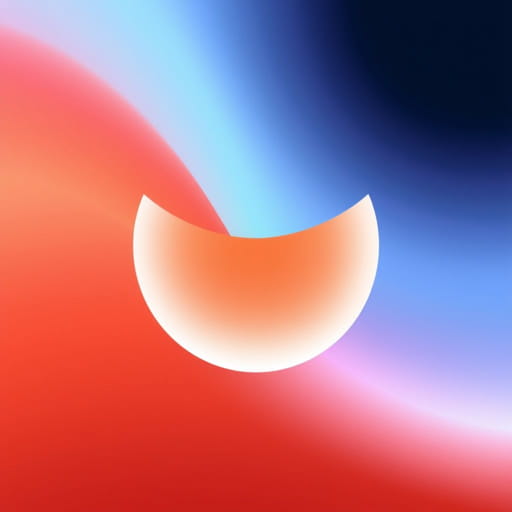
In everyday conversations and academic discussions, the word ‘gradation’ often appears in contexts ranging from art and language to geology and music. Despite its widespread use, many people may not fully understand what ‘gradation’ means or how it functions in different settings. Exploring this term can enhance our ability to describe subtle differences, transitions, and levels in a more precise and meaningful way. Understanding gradation helps clarify processes that are not binary or absolute, but rather occur in stages or degrees. This concept is vital in various fields and adds richness to both spoken and written language.
Definition of Gradation
Gradation refers to a gradual change or transition from one state, degree, or shade to another. It can be used to describe both physical and abstract changes. The essence of gradation lies in its incremental nature where change doesn’t happen all at once but progresses through a sequence of steps or degrees.
Etymology and Part of Speech
The word ‘gradation’ originates from the Latin termgradus, meaning ‘step.’ In English, it is used as a noun. The plural form is ‘gradations.’ As a noun, ‘gradation’ serves to name a process, condition, or arrangement involving gradual transition.
Examples of Gradation in Different Contexts
1. Gradation in Color
In art and design, gradation is commonly used to describe the smooth transition from one color to another. This technique helps create depth, shadow, and realism in visual compositions.
- The artist achieved a stunning effect by using a gentle gradation from dark blue to light turquoise.
- The sunset displayed a natural gradation of warm hues that filled the sky with beauty.
2. Gradation in Language
In linguistics, gradation refers to the variation of sounds within words, especially in vowel sounds, which is called ‘ablaut’ or ‘gradation’ in phonology.
- English strong verbs, like singsangsung, exhibit gradation in their vowel patterns.
- Sound gradation in languages can signal grammatical changes or verb tenses.
3. Gradation in Music
Musically, gradation refers to a smooth and progressive change in dynamics (volume), tempo (speed), or pitch. It contributes to emotional expression and narrative in musical compositions.
- The orchestra used a powerful gradation in volume to build tension in the symphony.
- Gradation of pitch in a melody can produce dramatic or soothing effects.
4. Gradation in Academic Grading
In educational contexts, gradation can refer to the system of grading or scoring that distinguishes levels of performance or achievement.
- There is a clear gradation between excellent, good, average, and poor performance.
- Teachers use grading rubrics to reflect the gradation in students’ understanding of the subject.
5. Gradation in Geology
In geology, gradation describes the process by which landscapes are leveled or smoothed out over time due to natural forces like wind, water, and erosion.
- River activity results in the gradation of valleys and floodplains over centuries.
- Soil gradation also refers to the distribution of different ptopic sizes in a sample.
Types of Gradation
Understanding the various types of gradation helps us apply the term appropriately across disciplines.
Color Gradation
This involves blending one color into another. It is widely used in art, photography, makeup, and fashion to create visual harmony and appeal.
Sound Gradation
Changes in tone, pitch, or vowel quality in speech or music reflect sound gradation. It adds nuance and variation to oral and musical communication.
Intensity Gradation
This type refers to the gradual change in the strength, force, or magnitude of something. Examples include light intensity, emotional expression, or physical exertion.
Structural Gradation
In architecture or design, this could refer to a gradual change in size, shape, or form of structures, often used to enhance aesthetic flow or functionality.
Using Gradation in a Sentence
To better understand how ‘gradation’ functions as a noun in real-life contexts, here are several examples:
- The painting features a beautiful gradation from pale pink to deep crimson.
- Her voice rose in a soft gradation, building suspense with every word.
- The exam results revealed a clear gradation in the students’ comprehension levels.
- The rocks show a gradation in texture from rough to smooth, indicating long-term erosion.
- The novel’s narrative tone goes through a subtle gradation from humorous to deeply reflective.
Importance of Understanding Gradation
Recognizing and using the concept of gradation improves communication, especially when describing subtle differences or progressive changes. Whether you’re an artist discussing color blending, a musician shaping a crescendo, or a teacher grading assignments, the idea of gradation allows for a more accurate representation of shifts and transitions.
Why Gradation Matters
- It captures the complexity of gradual change rather than assuming abrupt shifts.
- It enriches language by allowing more precise expression of differences in degree.
- It enhances observation skills, helping people notice nuances in behavior, performance, or appearance.
Common Synonyms and Related Terms
Several words are closely related to ‘gradation’ in meaning. Understanding these can help in expanding vocabulary and choosing the right word for different contexts.
- Progression a forward or onward movement, often step-by-step.
- Transition the process of changing from one state to another.
- Scale a series of levels or grades used for measurement.
- Hierarchy a ranking system often based on importance or status.
- Gradient a gradual incline or slope, often used in math and physics.
The meaning of ‘gradation’ extends far beyond a simple dictionary definition. It serves as a powerful linguistic tool to express gradual changes in many areas of life, such as art, science, language, and education. Knowing how to identify and apply the concept of gradation allows for clearer, more descriptive communication. Whether you’re describing a subtle color blend or analyzing shifts in academic performance, ‘gradation’ provides the language needed to capture the shades between extremes. This nuanced term enriches both understanding and expression in any discipline.