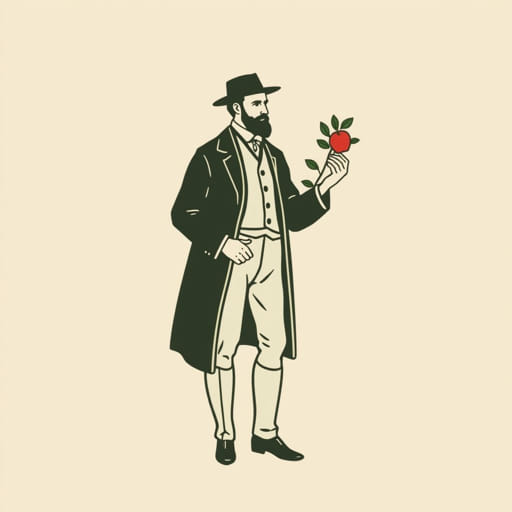
In the early days of American frontier life, when vast lands remained untamed and communities were only beginning to take root, one man became a symbol of simplicity, purpose, and the deep connection between people and nature. His name was John Chapman, though he is far better known by his legendary nickname: Johnny Appleseed. A pioneer nurseryman, Chapman traveled across the expanding western frontier of the United States, planting apple trees, sharing seeds, and leaving a legacy deeply ingrained in both agricultural and cultural history. His life reflects a blend of myth and reality, but his influence on horticulture, land cultivation, and American folklore remains significant to this day.
Early Life of John Chapman
John Chapman was born on September 26, 1774, in Leominster, Massachusetts. He was the second child of Nathaniel and Elizabeth Chapman. His father, a Minuteman who fought in the Revolutionary War, likely passed on to John a sense of independence and resilience. John’s mother died shortly after his birth, and his father remarried, raising a large family. Young John eventually left home in his teenage years to begin a lifelong journey that would take him deep into the American frontier.
The Mission of a Nurseryman
Unlike the myths that portray Chapman as randomly tossing apple seeds wherever he went, he was, in fact, a careful and skilled nurseryman. He established nurseries in strategic locations throughout Ohio, Indiana, Pennsylvania, and Illinois. These nurseries weren’t just random plantings Chapman would fence them in to protect the saplings from livestock and return periodically to care for them. His approach was both agricultural and entrepreneurial, as he sold and traded the seedlings to settlers who needed apple trees to meet land claim requirements.
Importance of Apple Trees in the Early United States
During John Chapman’s time, apple trees were not primarily grown for eating fresh fruit. Instead, apples were most often used to make cider, a fermented beverage that was far safer to drink than often-contaminated water sources. The apple tree also represented self-sufficiency and long-term settlement. For new settlers, planting an orchard was a sign of permanence, and Chapman’s nurseries made that possible in frontier regions where few such resources existed.
Philosophy and Spiritual Beliefs
John Chapman was a deeply spiritual man. He was a follower of the Swedenborgian Church, based on the teachings of Emanuel Swedenborg, a Swedish theologian and mystic. Chapman’s religious beliefs profoundly shaped his lifestyle and actions. He believed in living simply and in harmony with nature. He was known for his gentle demeanor, his avoidance of animal harm, and his refusal to graft trees believing it was a form of tampering with God’s creation.
A Life of Simplicity and Generosity
Chapman was known to wear simple clothes, often going barefoot, even in harsh weather. He would sleep outdoors or in the homes of settlers, offering apple seeds and spiritual wisdom in return for shelter. Despite having a modest income from his nurseries, he often gave away trees and seeds for free to those in need. His generosity and kind nature earned him affection and respect among settlers and Native American tribes alike. His relationship with indigenous peoples was peaceful; many viewed him as a friend and holy man.
Johnny Appleseed: The Man Behind the Legend
The image of Johnny Appleseed has become a part of American folklore a barefoot wanderer with a tin pot for a hat, spreading apple seeds across the land. While this image is rooted in truth, the real John Chapman was far more complex. He was not just a folk hero but a visionary horticulturist, businessman, and spiritual teacher. The legend may have romanticized his story, but it did so based on the remarkable character and achievements of the real man.
Legacy in Agriculture
Chapman’s work laid the foundation for apple cultivation in the Midwest. Although many of the apples from his seed-grown trees were too bitter to eat raw, they were ideal for cider, vinegar, and livestock feed. Over time, grafting techniques allowed for the cultivation of sweeter varieties, but Chapman’s nurseries provided the vital genetic diversity needed for future developments in apple breeding.
Cultural Legacy and Commemoration
John Chapman died in 1845 near Fort Wayne, Indiana. Today, he is remembered not only through history books but also through festivals, statues, parks, and even stamps issued in his honor. Schools are named after him, and each fall, many towns celebrate Johnny Appleseed Day to honor his contributions. His name is synonymous with kindness, pioneering spirit, and ecological awareness.
Environmental Symbolism and Relevance Today
In today’s world, where environmental consciousness is gaining urgency, John Chapman’s life serves as an early example of sustainable living and land stewardship. His preference for natural growth, respect for animals, and passion for reforestation aligns with modern environmental values. The story of the US nurseryman John Chapman offers more than a nostalgic glimpse into the past it offers a model for how individuals can live in harmony with nature while positively impacting society.
Key Contributions of John Chapman
- Planted and maintained apple nurseries across frontier states
- Helped settlers fulfill land claim requirements through orchards
- Promoted sustainable agricultural practices before the term existed
- Fostered peaceful relationships with Native American tribes
- Inspired generations through both legend and actual impact
The story of John Chapman, the US nurseryman known as Johnny Appleseed, is one of deep conviction, tireless effort, and lasting influence. His apple trees helped shape the agricultural landscape of a growing nation. More importantly, his values of humility, service, and environmental respect have stood the test of time. Through myth and fact, John Chapman remains a figure who reminds us of the enduring power of one person’s dedication to planting seeds both literal and symbolic that will nourish generations to come.