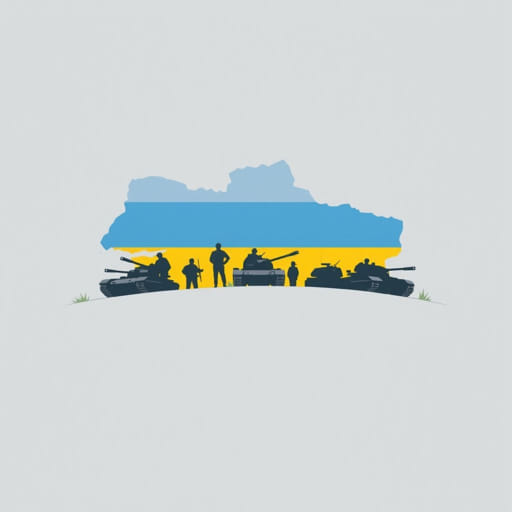
The war in Ukraine has become one of the most defining and tragic conflicts of the 21st century, drawing international attention and altering geopolitical landscapes. Since 2014, and more prominently with Russia’s full-scale invasion in February 2022, Ukraine has been at the heart of a major confrontation between Western democracies and the Russian Federation. This war has affected millions of lives, disrupted global markets, and raised important questions about sovereignty, security, and international law. Understanding the complex background and current developments is essential for grasping the full impact of the Ukraine conflict.
Background to the Conflict
The 2014 Annexation of Crimea
In 2014, after a wave of protests known as the Euromaidan movement led to the ousting of Ukraine’s pro-Russian president Viktor Yanukovych, Russia annexed Crimea. The annexation was widely condemned by the international community and marked a turning point in Ukraine-Russia relations. Following the annexation, pro-Russian separatist movements gained traction in the eastern regions of Donetsk and Luhansk, igniting armed conflict in the Donbas area.
Rise of Tensions with NATO and the EU
Ukraine’s increasing orientation towards NATO and the European Union was perceived by Moscow as a threat. Russia has long viewed NATO’s eastward expansion as encroaching upon its sphere of influence. In contrast, many Ukrainians saw alignment with the West as a path toward democratic governance and economic development.
The 2022 Invasion
Start of the Full-Scale War
On February 24, 2022, Russia launched a full-scale invasion of Ukraine, initiating a brutal military campaign across multiple fronts. Cities like Kyiv, Kharkiv, and Mariupol were bombarded. The war, initially expected by some to be swift, turned into a prolonged and intense struggle with heavy casualties on both sides.
Ukrainian Resistance and Global Support
The Ukrainian military and civilian population mounted a strong defense, bolstered by international military aid and economic support. Western countries supplied Ukraine with weapons, intelligence, and humanitarian assistance, while also imposing heavy sanctions on Russia. President Volodymyr Zelenskyy emerged as a prominent global figure, uniting Ukrainians and appealing to the world for support.
Humanitarian Crisis and Refugees
Displacement and Civilian Suffering
The war has triggered one of the largest refugee crises in Europe since World War II. Millions of Ukrainians have fled their homes, seeking refuge in neighboring countries like Poland, Romania, and Germany. Civilians in war-torn cities have faced dire shortages of food, water, medical supplies, and electricity.
War Crimes and International Response
Numerous reports have emerged of atrocities committed during the war, including attacks on civilian infrastructure, torture, and executions. International bodies such as the United Nations and the International Criminal Court have launched investigations into potential war crimes.
Impact on the Global Economy
Energy and Food Security
Ukraine is a major exporter of grain and agricultural products, and the conflict has disrupted global food supplies. Russia’s role as a major energy supplier has also been thrown into turmoil, prompting Europe to seek alternatives to Russian oil and gas. These disruptions have led to inflation, supply chain issues, and economic instability worldwide.
Sanctions on Russia
In response to the invasion, the United States, the European Union, and other allies imposed sweeping sanctions targeting Russian banks, industries, and individuals. These sanctions aim to cripple Russia’s economy and restrict its ability to fund the war. In retaliation, Russia reduced energy exports to Europe, exacerbating the continent’s energy crisis.
Military Developments and Territorial Control
Battle for the Donbas and Southern Ukraine
Fierce fighting has continued in the eastern Donbas region, with both sides suffering heavy losses. Ukrainian counteroffensives have reclaimed some territories, but control over cities and regions remains contested. Strategic locations like Bakhmut and Kherson have seen particularly intense battles.
Use of Advanced Weaponry
The war has seen the deployment of modern military technology, including drones, precision-guided missiles, and satellite surveillance. Western countries have provided Ukraine with advanced systems such as HIMARS, Patriot missiles, and tanks, while Russia has also escalated with missile strikes and mobilization efforts.
Diplomatic Efforts and Peace Talks
Attempts at Negotiation
Various efforts to broker peace have been made, including talks in Belarus, Turkey, and via the United Nations. However, fundamental disagreements such as the status of Crimea and the occupied territories have hindered progress. Both sides have accused the other of negotiating in bad faith.
Role of International Organizations
The United Nations, NATO, the OSCE, and the EU have all played roles in responding to the crisis. While some countries have maintained neutrality, most Western nations have supported Ukraine’s sovereignty and condemned Russia’s aggression. Diplomatic isolation of Russia has increased, though countries like China and India have maintained a more balanced approach.
Long-Term Implications
Geopolitical Shifts
The war has significantly altered global politics. NATO has strengthened its presence in Eastern Europe, and countries such as Sweden and Finland have sought membership. The concept of European defense has gained new importance, and alliances are being tested and redefined.
Ukrainian National Identity
The conflict has profoundly impacted Ukraine’s sense of national identity. What began as a struggle for political orientation has become a fight for cultural survival and independence. Ukrainian language, traditions, and historical narratives have gained stronger significance in the face of Russian aggression.
The war in Ukraine is a multi-faceted and deeply consequential conflict that goes far beyond borders. It has become a defining moment in global politics, humanitarian response, and international law. As the fighting continues, the world watches closely, hoping for a resolution that honors sovereignty, justice, and peace. Whether through military victory or diplomatic negotiation, the outcome will shape the future of Europe and the balance of global power for years to come.