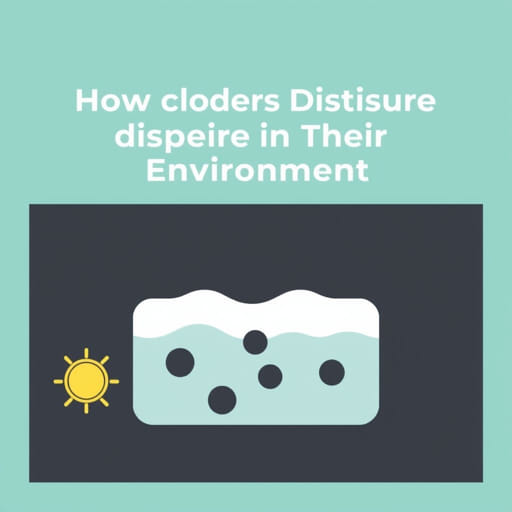
When molecules are introduced into an environment, they rarely stay confined to one area. Instead, they move and spread out, dispersing throughout the surrounding medium. This natural movement of molecules plays a critical role in biological systems, chemical reactions, environmental processes, and daily life activities such as the smell of food spreading through a room. To fully understand this phenomenon, it is essential to explore the mechanisms behind molecular dispersion, the factors that influence it, and real-world examples of how molecules interact with their environment.
Understanding Molecular Dispersion
What Is Molecular Dispersion?
Molecular dispersion refers to the process by which molecules spread from areas of higher concentration to areas of lower concentration. This spontaneous movement occurs due to the random motion of ptopics, and it results in an even distribution of molecules over time. The main scientific term associated with this process isdiffusion.
The Principle of Diffusion
Diffusion is a passive transport process that does not require external energy. Molecules are always in motion, and over time, they collide with one another, moving in random directions. This constant motion results in a net movement from regions where they are densely packed (high concentration) to areas where they are more spread out (low concentration), ultimately reaching equilibrium.
Types of Molecular Dispersion
Gas Dispersion
In gases, molecules move rapidly and are spaced far apart. This allows for quick and effective dispersion. For example, when perfume is sprayed in one corner of a room, the scent eventually spreads throughout the room because gas molecules diffuse through the air.
Liquid Dispersion
In liquids, molecules are closer together than in gases, but still able to move freely. A common example is adding food coloring to water. Initially, the color stays in a concentrated spot, but it gradually spreads until the color is evenly distributed throughout the water.
Solid Dispersion
Though molecular movement in solids is minimal due to tightly packed ptopics, some dispersion can occur under certain conditions. For example, in alloys or solid solutions, atoms or molecules may gradually spread throughout the solid matrix over time or when heated.
Factors That Influence Molecular Dispersion
Temperature
Higher temperatures increase the kinetic energy of molecules, making them move faster. This enhanced motion leads to quicker dispersion. For instance, sugar dissolves more rapidly in hot water than in cold water due to increased molecular activity.
Concentration Gradient
The difference in concentration between two areas affects the rate of diffusion. The larger the concentration gradient, the faster the molecules will disperse. Once equilibrium is reached, net movement stops, but molecular motion continues.
Medium of Dispersion
The state of the medium (gas, liquid, or solid) influences how easily molecules can move. Dispersion happens fastest in gases, followed by liquids, and is slowest in solids.
Molecular Size and Mass
Smaller and lighter molecules tend to move and disperse more quickly than larger, heavier molecules. For example, helium gas disperses faster than oxygen due to its smaller molecular weight.
Mechanisms Involved in Molecular Movement
Brownian Motion
This is the random, zigzag movement of ptopics suspended in a fluid, resulting from collisions with smaller molecules in the surrounding medium. Brownian motion is a visual representation of molecular dispersion on a microscopic scale.
Osmosis
Osmosis is a type of molecular dispersion involving the movement of water molecules across a semi-permeable membrane from an area of low solute concentration to an area of high solute concentration. This process is vital in biological systems, such as nutrient absorption in cells.
Facilitated Diffusion
In some cases, molecules need assistance to disperse across membranes. Proteins embedded in the membrane help transport specific molecules, such as glucose, that cannot diffuse freely due to their size or polarity.
Real-World Examples of Molecular Dispersion
Breathing and Gas Exchange
In the lungs, oxygen molecules diffuse from the alveoli (air sacs) into the bloodstream, while carbon dioxide diffuses in the opposite direction. This process relies on the concentration gradient between the air in the lungs and the blood.
Pollutant Spread in the Environment
When chemicals or pollutants are released into the air or water, they disperse through diffusion. Understanding molecular dispersion helps scientists predict how far and how fast harmful substances will travel, which is crucial for environmental protection.
Flavor Distribution in Food
Cooking often relies on molecular dispersion. Spices, herbs, and seasonings disperse through a dish, enhancing flavor uniformly. The dispersion is accelerated by stirring, heating, and marination techniques.
Medication Delivery
Drugs designed for controlled release rely on diffusion to deliver active compounds into the bloodstream gradually. The rate of dispersion determines how quickly the medication takes effect and how long it stays in the system.
Importance of Molecular Dispersion
In Chemistry
Chemists rely on molecular dispersion to conduct reactions effectively. Reagents must be evenly distributed in a solution for reactions to occur efficiently. Understanding how molecules spread aids in designing better experiments and industrial processes.
In Biology
Molecular dispersion is fundamental to life. From nutrient absorption in the gut to neurotransmitter movement across synapses, diffusion plays a vital role in sustaining biological functions.
In Engineering
Engineers use the principles of molecular dispersion in designing systems such as air purification units, water filtration systems, and chemical reactors. Controlled dispersion ensures optimal performance and safety.
Molecular dispersion is a naturally occurring phenomenon driven by the random motion of ptopics. Whether through simple diffusion, osmosis, or facilitated transport, molecules tend to spread out to occupy available space evenly. This process is fundamental to chemistry, biology, medicine, and environmental science. Understanding how molecules disperse in their environment helps explain everyday observations and allows us to develop technologies that mimic or harness these natural behaviors for human benefit. From the air we breathe to the medicine we take, molecular dispersion plays a crucial role in maintaining life and enabling scientific advancement.