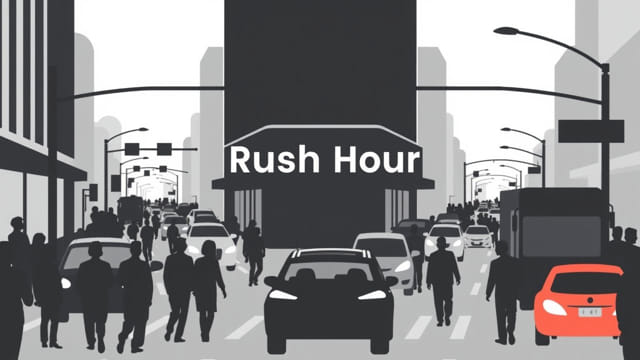
Rush hour is a term that most city dwellers and commuters know all too well. It refers to the peak periods during the day when traffic congestion is at its highest, whether on roads, trains, or buses. These hours are dictated largely by work schedules, school times, and other daily routines that compel people to be on the move at similar times. Understanding when rush hour occurs and how it varies by location and circumstance can help travelers and locals better plan their journeys to avoid unnecessary delays.
Definition of Rush Hour
What Does Rush Hour Mean?
Rush hour refers to the specific times of day when traffic is at its most intense due to the mass movement of people to and from work, school, and other daily activities. While it’s commonly associated with vehicular congestion, rush hour also applies to public transport systems that see spikes in passenger volume.
Rush Hour in Urban Settings
In densely populated urban areas, rush hour can last longer and be more intense than in suburban or rural regions. Cities with large populations and limited infrastructure are more susceptible to severe congestion, resulting in extended travel times and higher levels of frustration for commuters.
Typical Rush Hour Times
Morning Rush Hour
Morning rush hour usually occurs between7:00 AM and 9:00 AM, though it can begin as early as 6:00 AM in major cities. This time frame aligns with the start of standard business hours, typically beginning around 8:00 or 9:00 AM. School drop-offs also contribute to the volume of traffic during these hours.
Evening Rush Hour
Evening rush hour tends to begin around4:00 PM and lasts until 7:00 PM. People leaving work, school, and other appointments at the end of the day create a high volume of traffic returning to residential areas. In metropolitan cities with flexible work schedules, the evening rush may extend well into the night.
Variations by Region
Rush Hour in the United States
In most American cities, rush hour aligns with the typical 9-to-5 workday. Cities like Los Angeles, New York, Chicago, and Atlanta are known for heavy traffic congestion during peak hours. Some cities may experience early rush hours due to staggered work shifts in industries such as healthcare, retail, and manufacturing.
Rush Hour in Europe
European cities such as London, Paris, and Berlin have established rush hour patterns similar to the U.S., typically peaking from 7:30 AM to 9:30 AM and from 4:30 PM to 6:30 PM. However, extensive public transit systems like the London Underground or the Paris Metro often help reduce street traffic by absorbing a large portion of the commuting population.
Rush Hour in Asia
In densely populated cities like Tokyo, Beijing, and Mumbai, rush hour can be extremely intense. Tokyo’s morning peak may begin before 7:00 AM, and commuters are often packed into trains with precision-timed efficiency. Traffic in Asian megacities is often worsened by high car ownership and limited road capacity.
Factors That Affect Rush Hour
Work and School Schedules
The most significant driver of rush hour is the synchronization of daily schedules. When schools, businesses, and government offices open and close around the same time, people tend to travel en masse during narrow time windows, causing traffic congestion.
Weather Conditions
Rain, snow, fog, or extreme temperatures can slow down traffic flow and exacerbate rush hour conditions. In areas prone to inclement weather, rush hour might begin earlier and last longer as drivers proceed more cautiously or public transportation slows down.
Public Events and Construction
Sporting events, concerts, or conventions can create temporary rush hour-like conditions, especially near venues or central districts. Similarly, road construction or public transport outages can redirect traffic and extend peak travel times well beyond the usual schedule.
Public Transportation During Rush Hour
Peak Travel Times on Trains and Buses
Just like on roads, buses and trains see a significant rise in passengers during rush hour. Transit systems often schedule more frequent service during peak hours to accommodate demand. However, overcrowding, delays, and longer wait times are still common experiences.
Advantages of Using Public Transit
- Reduces personal stress compared to driving in heavy traffic
- Often faster due to dedicated lanes or subway systems
- Environmentally friendly alternative to single-occupancy vehicles
- Cost-effective, especially with daily or monthly passes
Tips to Avoid Rush Hour
Travel Outside Peak Hours
If possible, plan your journeys for non-peak periods such as mid-morning (after 9:30 AM) or early afternoon (before 3:00 PM). This can result in shorter travel times, more comfortable public transit rides, and lower stress.
Use Traffic Apps
Navigation tools like Google Maps, Waze, or local transit apps can provide real-time traffic updates, route alternatives, and estimated arrival times. These tools are especially helpful in adjusting plans on the go.
Consider Flexible Work Options
Remote work, flexible schedules, or staggered shifts are increasingly popular in today’s work culture. Employers that allow flexible hours help reduce congestion and improve overall work-life balance for employees.
Environmental Impact of Rush Hour
Increased Emissions
Idling engines and stop-and-go traffic during rush hour contribute significantly to air pollution. Urban areas with frequent traffic congestion often have higher levels of smog and greenhouse gases.
Sustainability Solutions
- Carpooling programs to reduce the number of vehicles on the road
- Improved public transit to encourage people to leave their cars at home
- Bike lanes and walkable neighborhoods to support alternative commuting
- Investment in green infrastructure and intelligent traffic systems
Understanding when rush hour happens and how it varies depending on location, season, and lifestyle is essential for efficient travel planning. Whether you’re a daily commuter, a tourist, or someone trying to navigate a new city, being aware of traffic peaks can help you save time, reduce stress, and minimize your environmental impact. As cities evolve and work habits continue to change, rush hour may also shift in nature, but for now, it’s a phenomenon that continues to shape our daily lives.