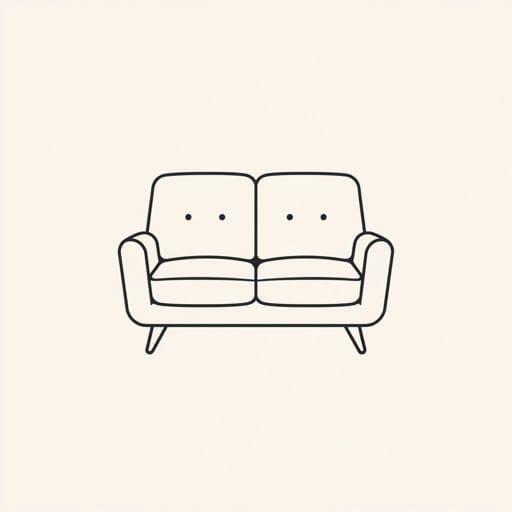
On an ordinary afternoon in the quiet town of Greenhollow, a peculiar piece of furniture became the center of attention: a modest, slightly worn wooden chair designed not for one person, but for two. Its design wasn’t fancy. There were no gold accents or cushions of velvet. And yet, this chair carried with it a story so rich, it transformed how people viewed not only furniture, but connection itself. The tale of ‘A Chair for Two’ is more than a story about a seat it’s about unity, companionship, and how simple objects can hold powerful meanings.
The Origin of the Chair
Local folklore tells us that the chair was built nearly eighty years ago by a carpenter named Thomas Renley. Known for his quiet nature and skilled hands, Thomas wasn’t someone who usually made eccentric designs. However, after marrying his childhood sweetheart, Eliza, he set out to create a unique gift. He didn’t want to carve a bench or build a loveseat he wanted a single chair that could comfortably seat two, symbolizing how they would always share one life, one space, one purpose.
Designing Togetherness
The chair’s most distinctive feature was its dual curvature. Instead of a typical straight back and armrests, the back was shaped like two subtle arcs converging in the center, and the seat had a gentle inward slope, encouraging those sitting to lean slightly toward one another. The arms of the chair were wide and shared, designed so hands would naturally meet. Thomas believed comfort wasn’t only in cushions it was in presence, in shared moments, in closeness.
The Symbol of Connection
Over the decades, ‘A Chair for Two’ passed through generations. While the wood grew darker and scratches formed on its legs, the chair maintained its essence. In Greenhollow, it became more than furniture it was an heirloom of harmony. People sat in it to propose marriage, to share secrets, to grieve together, and even to reconcile. The chair had a reputation for mending bonds. Local couples believed that sharing a moment on it could reignite lost sparks or bring clarity to conflict.
A Witness to Life
Some of the most intimate and powerful conversations in town happened on that chair. Among the more famous stories:
- A young couple once considering divorce spent an hour in silence on the chair. By the end, they held hands and agreed to try again.
- Two brothers who hadn’t spoken in ten years sat on it during a family reunion. Laughter followed within minutes.
- An elderly widow used to sit on it daily, always leaving a space beside her, whispering to her late husband.
Each moment added character to the chair. Though it never spoke, it held stories in its grain and gave comfort with its creaks.
The Chair in the Modern Day
As the world around Greenhollow changed with new technologies, fast-paced lifestyles, and people becoming increasingly disconnected the symbolic value of the chair only grew stronger. Younger generations began rediscovering it, using it in creative ways: art students painted it into murals, writers used it as a metaphor in poems, and photographers captured engagement photos with it at the center.
More Than Sentiment
What made ‘A Chair for Two’ enduring wasn’t just its emotional legacy. Its design subtly challenged the concept of personal space. In an age of individualism, the chair reminded people to lean in, to listen, to be close. You couldn’t sit in it and remain distant. Physically and emotionally, it invited contact.
Therapists and relationship counselors in the region even began recommending couples to visit the chair in Greenhollow’s town museum, where it was eventually relocated to ensure preservation. A new tradition started: before weddings, couples would sit for five minutes on the chair, committing not just with vows, but with shared silence, reflection, and closeness.
Lessons from the Chair
While on the surface, A Chair for Two is simply a piece of carpentry, its deeper significance invites several reflections:
- Intentional Design: Objects crafted with love and purpose can carry emotional weight far beyond their physical form.
- Togetherness Matters: In a world that often pushes for independence, the chair teaches the power of interdependence and connection.
- Shared Space: Relationships thrive not in isolation, but in shared environments where both individuals make room for one another.
Replicas and Reinterpretations
Inspired by the original, many designers have tried to replicate A Chair for Two. Though no replica captures its full essence, the trend has sparked a movement in furniture design where emotional utility is valued as much as aesthetic appeal. These chairs now appear in cafes, libraries, and counseling offices, promoting intimate interaction in public and private settings alike.
A Legacy of Closeness
In the end, ‘A Chair for Two’ reminds us that even the simplest objects can carry the weight of human experience. It’s not just about wood, screws, or symmetry it’s about what happens when two people choose to sit close, to share a moment, a laugh, a silence. In a time where distraction is everywhere and real connection feels rare, the chair stands as a quiet revolution. A call to sit down, shoulder to shoulder, and just be together. Whether in Greenhollow or elsewhere, the legacy of this humble chair continues to spread one shared seat at a time.
Let me know if you want a version adapted for a different purpose (e.g., blog layout, product promo, or fiction short story format).