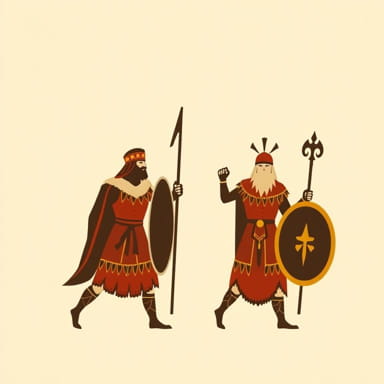
The Germanic tribes played a significant role in shaping the early medieval history of Europe, and among the most prominent of these tribes were the Ostrogoths and Visigoths. Originally part of a single Gothic group, they eventually split and carved out distinct paths in different regions of the collapsing Roman Empire. These two branches of the Goths influenced the political, military, and cultural developments of their time. Their interactions with the Roman Empire, as both enemies and allies, reshaped the map of Europe and laid the foundations for new kingdoms. Understanding the history and legacy of the Ostrogoths and Visigoths is crucial for appreciating the complexities of post-Roman Europe.
Origins of the Gothic Peoples
Common Ancestry and Migration
The Goths were originally a Germanic people believed to have originated in Scandinavia before migrating southward toward the Black Sea. By the 3rd century CE, they had divided into two main groups: the Ostrogoths (Eastern Goths) and the Visigoths (Western Goths). The division was geographical and later political, based on where they settled and how they interacted with the Roman Empire.
Language and Culture
Both groups spoke Gothic, a now-extinct East Germanic language, and shared similar customs, pagan religious beliefs, and tribal structures. Their society was warrior-oriented, and leadership often depended on a chieftain’s military strength and success in battle.
The Visigoths: Rise and Expansion
Conflict with Rome
The Visigoths first came into direct contact with Rome in the late 4th century. Driven westward by the advancing Huns, they sought refuge within the borders of the Eastern Roman Empire. However, mistreatment by Roman officials led to the famous Battle of Adrianople in 378 CE, where the Visigoths, under Fritigern, defeated and killed Emperor Valens.
Sack of Rome
Under the leadership of Alaric I, the Visigoths continued to clash with Rome. In 410 CE, they shocked the empire by sacking the city of Rome itself, marking a turning point in the decline of Roman authority in the West. This event symbolized the vulnerability of the empire and the growing power of barbarian tribes.
Settlement in Hispania
After years of migration and conflict, the Visigoths eventually settled in the Iberian Peninsula (modern-day Spain and Portugal). In 418 CE, they established a kingdom in southwestern Gaul, later expanding into Hispania. The Visigothic Kingdom lasted until the early 8th century when it was conquered by Muslim forces during the Umayyad expansion.
Legal and Cultural Contributions
Despite their military origins, the Visigoths contributed to European legal traditions. The Codex Euricianus, issued by King Euric, was one of the earliest codified laws among Germanic tribes. Later, the Liber Judiciorum, compiled under King Recceswinth in the 7th century, blended Roman and Germanic legal principles and influenced future Spanish legal codes.
The Ostrogoths: Eastern Dominance
Subjugation by the Huns
Unlike the Visigoths, the Ostrogoths fell under the control of the Huns during the 4th century. They were part of Attila the Hun’s vast army and participated in various campaigns across Europe. After Attila’s death in 453 CE, the Ostrogoths regained their independence and sought new opportunities in the wake of the Hunnic collapse.
Conquest of Italy
In the late 5th century, the Eastern Roman (Byzantine) Emperor Zeno authorized Theodoric the Great, king of the Ostrogoths, to reclaim Italy from Odoacer, a Germanic chieftain who had deposed the last Western Roman Emperor. In 493 CE, Theodoric defeated Odoacer and established the Ostrogothic Kingdom of Italy.
Rule of Theodoric the Great
Theodoric’s reign (493526 CE) marked a period of relative stability. Though a Germanic ruler, he maintained Roman traditions, employed Roman administrators, and supported cultural continuity. Theodoric encouraged religious tolerance between the Arian Ostrogoths and Catholic Romans, although tensions remained.
Decline and Fall
After Theodoric’s death, internal struggles and increasing conflict with the Byzantine Empire weakened the Ostrogothic Kingdom. Emperor Justinian I launched the Gothic War (535554 CE), and by 554, Byzantine forces had largely retaken Italy. The Ostrogoths, as a political entity, disappeared from history, though their legacy remained in cultural and architectural contributions.
Religious Identity and Tensions
Arian Christianity
Both the Visigoths and Ostrogoths were initially adherents of Arian Christianity, a belief considered heretical by the Roman Catholic Church. This difference often caused religious friction with the Roman population they ruled.
Conversion to Catholicism
In the late 6th century, the Visigoths officially converted to Catholicism under King Reccared I. This move helped to integrate the Visigothic elite with the local Roman population and the broader Catholic world, reducing internal conflict and strengthening the kingdom’s political legitimacy.
Military Strategies and Governance
Tribal Kingship
Both the Ostrogoths and Visigoths were ruled by kings chosen from noble families, often based on military prowess. Governance was tribal and personal, relying on loyalty rather than institutional administration. Over time, their kingdoms adopted more Roman bureaucratic structures.
Alliances and Warfare
Military strength remained central to Gothic power. They formed alliances with, and also fought against, the Roman Empire. Their success often depended on their ability to adapt Roman military techniques and maintain disciplined armies.
- Visigothic Forces: Known for their cavalry and mobile warfare, particularly effective during their campaigns in Gaul and Spain.
- Ostrogothic Armies: Blended Germanic tactics with Roman organization, especially under Theodoric’s leadership.
Legacy and Historical Impact
Transformation of the Roman World
The Goths, like many Germanic tribes, were not merely destroyers of the Roman world but active participants in its transformation. They preserved many Roman customs while introducing their own governance and cultural practices. Their kingdoms served as bridges between the classical and medieval eras.
Architectural and Artistic Influence
Gothic influence can be found in art, architecture, and law. While much was Roman in style, the Ostrogoths contributed to building projects such as churches and public works in Ravenna, which still stand today as UNESCO World Heritage Sites.
Historical Memory
The names of the Ostrogoths and Visigoths continue to carry symbolic meaning in European history. They represent both the decline of classical Rome and the emergence of new medieval European identities. Their complex relationships with Rome, their administrative innovations, and their adaptation of Roman traditions helped shape the foundations of Western Europe.
The Ostrogoths and Visigoths were not merely barbarian invaders they were essential players in the transition from the Roman Empire to medieval Europe. Their unique stories of migration, conquest, and adaptation highlight the dynamic nature of cultural and political change during this transformative period. Through their laws, military campaigns, and governance, they influenced the course of European history for centuries to come.