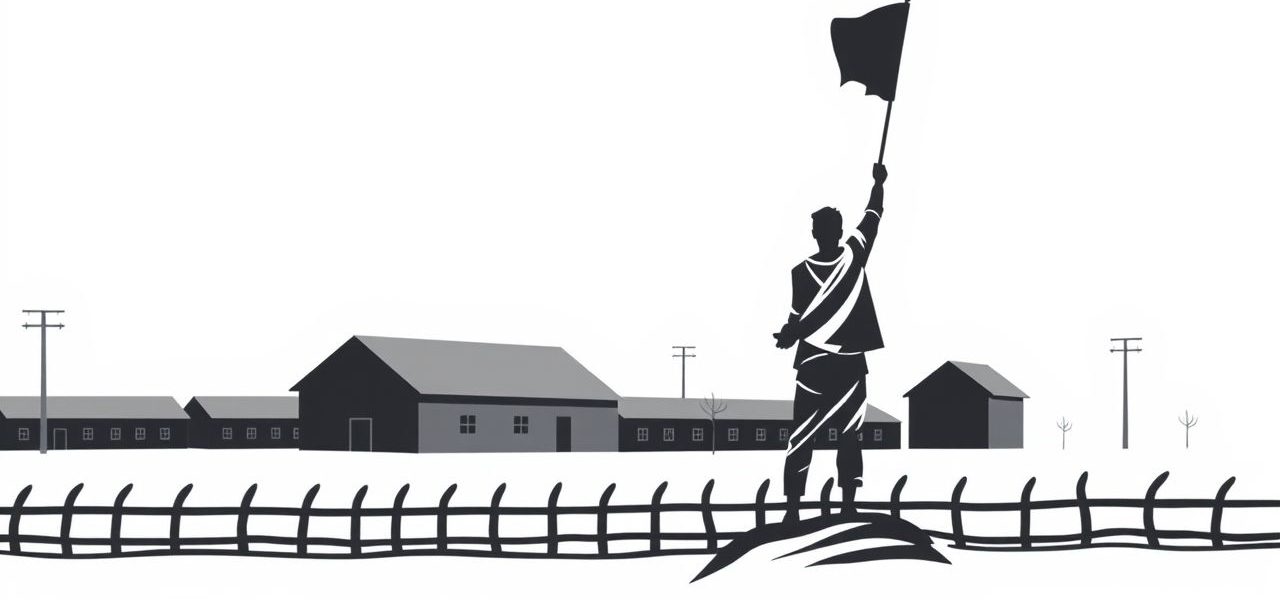
In the final months of World War II, a remarkable series of events unfolded involving the men of Easy Company, 506th Parachute Infantry Regiment, 101st Airborne Division, known popularly as the ‘Band of Brothers.’ These American soldiers, already battle-hardened by the Normandy invasion and the brutal winter at Bastogne, stumbled upon something they had not anticipated a Nazi concentration camp in southern Germany. The experience left an indelible mark on each of them and contributed to global understanding of the horrors of the Holocaust. Their story remains one of both horror and heroism, highlighting the profound emotional and moral impact of liberating concentration camps during World War II.
Who Were the Band of Brothers?
The ‘Band of Brothers’ refers to a unit of American paratroopers who were trained at Camp Toccoa, Georgia, and deployed across several major campaigns during World War II. Easy Company was involved in Operation Overlord (D-Day), Operation Market Garden, and the Battle of the Bulge. The term gained international recognition after historian Stephen E. Ambrose published a book by the same name in 1992, which was later adapted into an acclaimed HBO miniseries.
The men of Easy Company were celebrated for their exceptional discipline, courage, and brotherhood. From Normandy to Hitler’s Eagle’s Nest in Bavaria, they fought through some of the most difficult conditions, suffering severe casualties but continuing to press forward. However, what they encountered near the end of their journey in April 1945 shocked them in a way no battlefield ever had.
Discovering the Camp Near Landsberg
As American forces advanced deeper into Germany in the spring of 1945, Easy Company moved into Bavaria. Near the town of Landsberg, the soldiers came across what appeared to be a prison camp. It was later identified as part of the Kaufering subcamps, which were satellite labor camps attached to the larger Dachau concentration camp system.
The initial signs were ominous. Emaciated prisoners in striped uniforms, skeletal in appearance, were found wandering outside barbed wire fences. Many had collapsed from hunger or illness. Buildings within the compound were filled with corpses, and the stench of death was overwhelming. The soldiers realized they were standing amidst a place of systematic and unimaginable cruelty.
The Condition of the Prisoners
The inmates of the camp were mostly Jews from across Europe who had been forced to work under brutal conditions for the Nazi war machine. They suffered from starvation, untreated disease, and exposure to the elements. Many had lost hope of ever being rescued. When Easy Company arrived, many prisoners could barely walk or speak.
The soldiers provided food, blankets, and medical assistance where they could. Medics were called in, and additional troops helped secure the area. The liberators, hardened by combat, were left speechless by the sight of human suffering that went beyond the battlefield. Some soldiers were seen weeping, others angrily searching for camp guards who had fled before the Americans arrived.
The Emotional Impact on Easy Company
Many of the men in Easy Company later recalled that liberating the camp was one of the most defining and disturbing moments of their wartime experience. Although they had trained for combat and witnessed death many times, nothing prepared them for the reality of systematic genocide.
Some soldiers said they felt deep guilt for not arriving sooner. Others described feelings of helplessness, rage, and disbelief. In postwar interviews and memoirs, many of the soldiers could not speak of the experience without emotion, even decades later. It was a moment that stayed with them long after the war ended.
Eyewitness Accounts and Historical Record
Historians and journalists documented the liberation of the concentration camps extensively. The testimonies of soldiers, survivors, and civilians provided irrefutable evidence of Nazi atrocities. Members of Easy Company gave vivid descriptions of the camp’s conditions, and their stories were preserved through oral history projects, books, and visual media.
The liberation of the Kaufering camps by American forces, including Easy Company, helped to open the eyes of the world to the full scale of the Holocaust. For many people in the United States and allied nations, it was the first time they saw the brutal consequences of Nazi ideology up close.
Legacy and Remembrance
The actions of Easy Company during the liberation of the concentration camp remain a crucial part of their legacy. While they were primarily known for their military victories, their role in liberating Nazi camps brought a moral weight to their service. They were not only warriors; they were witnesses to one of the greatest crimes in history.
In memorial ceremonies and Holocaust education initiatives, the soldiers of Easy Company are often remembered for their part in this pivotal moment. Their courage not only helped end the war but also brought justice and visibility to victims of unspeakable atrocities.
Teaching the Lessons of the Past
The liberation of concentration camps by American troops, including the Band of Brothers, continues to serve as a powerful lesson in the value of human dignity and the consequences of hatred and indifference. Educational programs and historical exhibitions frequently include the firsthand accounts of soldiers like those from Easy Company to emphasize the real-world impact of the Holocaust.
By sharing their experiences, the surviving members helped ensure that future generations would never forget what they witnessed. Their testimonies have been vital in preserving historical truth and countering denialism.
The story of the Band of Brothers liberating a Nazi concentration camp near Landsberg is more than just a wartime anecdote it is a testament to the resilience of the human spirit and the role of ordinary soldiers in uncovering extraordinary evil. These American colonists-turned-soldiers, hailing from small towns and cities across the United States, found themselves face to face with the darkest chapter of the 20th century.
Their presence at the camp was not planned, but it became one of the most significant parts of their mission. They bore witness, they acted with compassion, and they shared what they saw with the world. The legacy of their bravery is not only written in military records but etched in the collective memory of humanity. Their courage in the face of horror reminds us why the fight against tyranny and hatred is always worth undertaking.