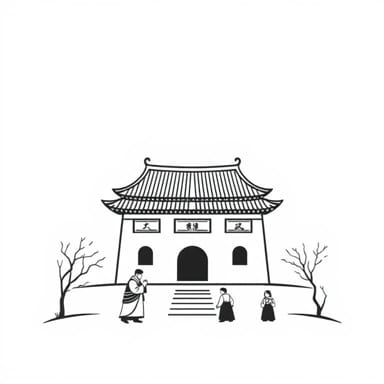
In the heart of ancient China lies a surprising and lesser-known chapter of Jewish history the story of the Jews of Kaifeng. This community, which once thrived along the banks of the Yellow River, represents a remarkable fusion of Jewish tradition and Chinese culture. For centuries, the Jewish population of Kaifeng lived in relative peace, practicing their faith while adapting to the customs and language of their surroundings. Their story is a testament to resilience, cultural integration, and the enduring strength of identity in a foreign land. Although small and often overlooked, the Jews of Kaifeng remain a symbol of how Jewish life can flourish far from its traditional centers.
Origins of the Kaifeng Jewish Community
The origins of the Kaifeng Jews are still a subject of scholarly debate, but most historians agree that they arrived in China during the Song Dynasty, around the 10th or 11th century. These Jewish merchants likely came along the Silk Road, attracted by China’s flourishing economy and stability. Kaifeng, then the capital of the Northern Song Dynasty, was a cosmopolitan city that welcomed foreign traders and religious communities.
According to oral tradition and surviving records, the Jews referred to themselves as the ‘people who pluck out the sinew,’ referencing the biblical dietary law of not eating the sciatic nerve. This demonstrated their adherence to Jewish law even in a distant land. Over time, the community settled permanently in Kaifeng, where they built a synagogue and established families who would maintain Jewish practices for generations.
Early Integration and Royal Recognition
Chinese imperial authorities tolerated and occasionally encouraged religious diversity. During the Ming Dynasty, the Kaifeng Jews were granted recognition as one of the many officially accepted religious groups. The Chinese emperor even bestowed upon them a stone tablet in 1489 that praised their monotheism and contributions to society.
This tablet, along with others discovered later, provided key historical information. They mentioned that the Jews came from India or Persia and identified themselves as descendants of Abraham. These inscriptions combined Chinese script with Judaic references, offering a rare glimpse into how deeply these two cultures blended.
Religious Practices and Synagogue Life
Despite their physical distance from other Jewish communities, the Kaifeng Jews maintained core Jewish beliefs and rituals. They observed the Sabbath, kept kosher dietary laws, practiced circumcision, and celebrated Jewish holidays such as Passover and Yom Kippur. Hebrew texts were preserved alongside Chinese translations, and Jewish education remained a priority for community leaders.
The Kaifeng Synagogue
One of the community’s most significant achievements was the construction of a synagogue in 1163. It was rebuilt several times due to floods and fires and stood as a central institution for over 700 years. The building included traditional Chinese architectural features but served familiar Jewish functions: prayer, teaching, and ritual gathering.
The synagogue housed Torah scrolls, religious manuscripts, and ceremonial objects. Kaifeng Jews also developed unique liturgical customs influenced by Chinese culture while still retaining essential Jewish laws. The structure was eventually destroyed in the 19th century, but its legacy lives on through archaeological findings and preserved manuscripts.
Decline and Cultural Assimilation
Beginning in the 17th century, the Kaifeng Jewish community faced a slow process of decline. Several factors contributed to this:
- Frequent natural disasters such as floods damaged the synagogue and homes
- Economic hardship made it difficult to sustain community institutions
- Lack of contact with global Jewish centers led to diminished religious knowledge
- Intermarriage and social integration diluted traditional practices
By the 1800s, many members of the community no longer spoke Hebrew or read religious texts. Some became officials or scholars in the imperial bureaucracy, further integrating into Han Chinese society. Although they retained a sense of Jewish ancestry, religious observance declined substantially.
Western Rediscovery
In the 17th century, Jesuit missionaries in China learned of the Kaifeng Jews and reported their findings to Europe. These accounts sparked interest among scholars and travelers, some of whom visited Kaifeng to document the Jewish presence. In the 19th and 20th centuries, Christian missionaries made efforts to convert the Kaifeng Jews, sometimes in exchange for material support. While some accepted, others resisted, trying to maintain what remained of their Jewish identity.
Modern-Day Legacy and Revival Efforts
Despite centuries of decline, interest in the Kaifeng Jewish community has revived in recent decades. Descendants of the original families who still live in Kaifeng have worked to rediscover their heritage and reconnect with global Jewry. Several families have claimed lineage from the original Jewish clans, such as the Zhao, Ai, Gao, Jin, Li, Shi, Zhang, and Bai.
Reclaiming Jewish Identity
In the 21st century, some Kaifeng descendants began studying Judaism, learning Hebrew, and participating in Jewish rituals. A few individuals have emigrated to Israel, where they underwent formal conversion or reaffirmation of Jewish status. Jewish organizations have offered support through education, cultural exchange, and community visits.
However, efforts to formally re-establish Jewish practice in Kaifeng have faced challenges, particularly due to limitations on religious activity in modern China. Despite these restrictions, the desire to preserve their unique heritage persists among descendants.
Global Interest and Cultural Preservation
Scholars and Jewish communities worldwide continue to study the Kaifeng Jews for what they represent: a unique diasporic group that adapted and endured in an entirely different cultural landscape. Books, topics, and documentaries have been produced to share their story. Museums and academic institutions have also helped preserve artifacts, including Torah scrolls and prayer books written in both Hebrew and Chinese.
Significance of the Kaifeng Jews
The Jews of Kaifeng occupy a special place in Jewish and Chinese history. They exemplify how religious identity can survive despite isolation, integration, and adversity. Their story bridges continents and traditions, reminding the world of the diversity within the Jewish diaspora.
At the same time, the Kaifeng Jews challenge traditional definitions of what it means to be Jewish. Their customs, names, and languages differ from those of Ashkenazi or Sephardic communities, yet their connection to Judaism is no less valid or profound.
A Heritage Worth Preserving
The history of the Jews of Kaifeng is one of endurance, adaptation, and cultural synthesis. Although the community has dwindled and religious practice has faded, their legacy continues to inspire those seeking to understand the richness of global Jewish history. Today, as descendants reconnect with their roots and scholars uncover new details, the story of Kaifeng’s Jewish community is being written once again not as a tale of loss, but as one of rediscovery and pride.