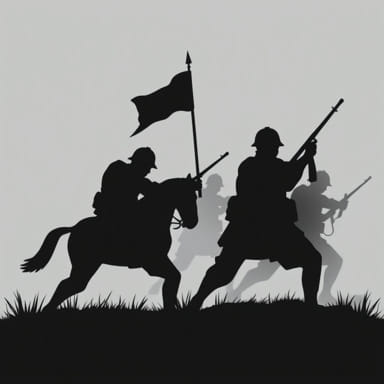
The First Battle of the Marne, fought from September 6 to 12, 1914, stands as one of the most decisive and transformative engagements of World War I. As the German army advanced deep into France, victory seemed within its grasp. However, a sudden and bold counteroffensive by French and British forces changed the course of the conflict. This battle not only halted the German advance toward Paris but also led to a strategic stalemate that shaped the war’s future. The outcome of the First Battle of the Marne had far-reaching consequences, both militarily and politically, and marked the beginning of trench warfare that would come to define the Western Front.
Context Leading Up to the Battle
Germany had launched its invasion of Belgium and France in August 1914 under the Schlieffen Plan, a military strategy designed to avoid a two-front war by quickly defeating France before turning east to face Russia. The rapid German advance through Belgium and northern France caused alarm among the Allies, especially as Paris seemed within reach.
By early September, German forces were positioned near the Marne River, threatening the French capital. However, logistical issues, extended supply lines, and communication breakdowns began to affect German coordination. Meanwhile, French and British forces regrouped and prepared to launch a counterattack, led by French General Joseph Joffre and British Field Marshal Sir John French.
The Turning Point on the Marne
The Allied counteroffensive began on September 6, with the French Sixth Army launching an attack on the exposed right flank of the German First Army under General Alexander von Kluck. The surprise of the assault, combined with effective coordination by the Allies, forced the Germans to halt their advance and begin a withdrawal.
The role of reconnaissance, including aerial observation and intercepted communications, played a crucial part in enabling the Allies to exploit weaknesses in the German lines. General Joffre’s decision to redeploy troops using Parisian taxicabs an action that became symbolic of French resilience further demonstrated the urgency and improvisation of the moment.
Key Tactical Outcomes
- The German army was forced to retreat approximately 4050 kilometers, abandoning its goal of swiftly capturing Paris.
- The Schlieffen Plan effectively failed, resulting in a prolonged and uncertain war.
- The gap between German armies allowed Allied forces to strike decisively and disrupt the overall cohesion of the German advance.
Immediate Consequences of the Battle
The outcome of the First Battle of the Marne was a strategic victory for the Allies. While not a complete defeat for the Germans, it shattered their hopes of a quick victory in the West. The battle marked the end of mobile warfare in 1914 and ushered in a new phase of entrenchment and attrition that would characterize the Western Front.
German commanders, including General Helmuth von Moltke the Younger, were heavily criticized for failing to maintain momentum and coordination. The retreat deeply demoralized the German high command, and Moltke was soon replaced as Chief of the German General Staff.
Effects on Military Strategy
- The German retreat led to the ‘Race to the Sea,’ where both sides attempted to outflank each other to the north, resulting in a continuous line of trenches from the Swiss border to the North Sea.
- Trench warfare began in earnest, setting the stage for years of grueling combat with limited territorial gains.
- New emphasis was placed on artillery, defensive fortifications, and attrition-based strategies rather than fast, decisive offensives.
Long-Term Impact on World War I
The First Battle of the Marne reshaped the trajectory of World War I. A war that many had expected to be over by Christmas turned into a prolonged and devastating global conflict. The German failure to capture Paris early ensured that the Western Front would remain a static, brutal battleground for years to come.
Politically, the battle galvanized support for the war effort in France and Britain. It also underscored the importance of coordination among Allied forces and the need for improved communication and intelligence gathering. For Germany, the battle exposed the limitations of its strategic planning and the vulnerability of even the most well-organized offensives when met with determined resistance.
Broader Implications
- Millions of soldiers would be drawn into trench warfare, suffering immense casualties with little change in territory.
- The battle demonstrated the importance of mobility, communication, and civilian support in modern warfare.
- It began a psychological shift, as hopes for a short war faded and nations prepared for prolonged struggle.
Human Cost of the Battle
Like many battles of World War I, the First Battle of the Marne came at a great human cost. Total casualties dead, wounded, and missing were estimated at over one million combined. The French suffered around 250,000 casualties, the British Expeditionary Force approximately 13,000, and the Germans more than 250,000.
The scale of loss shocked the world and revealed the true nature of modern industrial warfare. Mass mobilization, mechanized killing, and extended battles over wide fronts marked a new era in conflict, leaving scars on soldiers and civilians alike.
Legacy of the First Battle of the Marne
The legacy of the First Battle of the Marne lies not only in its strategic significance but also in the symbolic meaning it carried. For the French, it represented a heroic stand that saved their capital and nation. For the British, it validated their support of France and highlighted the effectiveness of Allied cooperation. For the Germans, it marked the collapse of a carefully orchestrated invasion plan and foreshadowed a long, uncertain conflict ahead.
Historians often cite the battle as one of the key turning points in World War I. Its outcome shaped military planning for the remainder of the war and demonstrated that even the best-laid plans can unravel in the face of strong resistance and unforeseen circumstances.
Symbols of Resistance and Hope
- The use of Parisian taxis to transport soldiers remains an enduring image of civilian contribution to the war effort.
- The French Army’s success helped restore national morale and unity after weeks of retreat.
- The battle served as an early example of how rapid adaptation and decisive leadership can alter the course of war.
The outcome of the First Battle of the Marne was a critical moment in World War I, halting the German advance, saving Paris, and setting the stage for a new kind of warfare. It exposed the realities of industrial conflict and the unpredictability of even the most meticulously planned operations. While it did not end the war, it reshaped its nature ensuring that the struggle would be longer, bloodier, and far more complex than anyone had imagined at the war’s outset. Its legacy continues to be studied as a powerful reminder of the importance of resilience, coordination, and strategic flexibility in times of crisis.