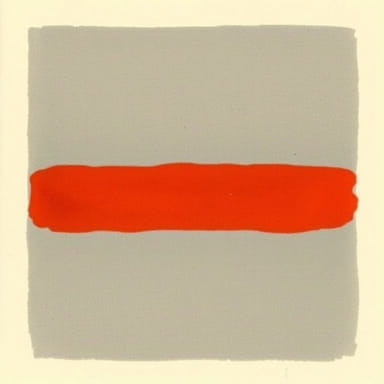
No 10 by Mark Rothko is more than just a painting it is an experience, a meditative visual field that invites reflection, emotion, and silence. Created in 1958 during the height of Rothko’s mature period, this work exemplifies his exploration of color, form, and spirituality. With its large canvas and soft-edged blocks of color, No 10 commands attention not through complexity or narrative, but through an abstract language that communicates directly to the human soul. For anyone interested in abstract expressionism, Rothko’s No 10 is a landmark artwork that encapsulates the very essence of what modern art can be.
The Significance of Mark Rothko in Abstract Expressionism
Understanding Rothko’s Style
Mark Rothko is widely regarded as one of the leading figures of abstract expressionism, a post-World War II art movement centered in New York City. Unlike the action-driven works of his contemporaries like Jackson Pollock, Rothko’s approach was more introspective. He developed a distinctive style characterized by large canvases filled with luminous rectangles of color that appear to float against a colored background.
Rothko’s paintings are known not for what they depict, but for how they make viewers feel. His goal was not to paint a scene or object, but to evoke a direct emotional response. He once said he was interested in expressing basic human emotions tragedy, ecstasy, doom. No 10 fits this vision perfectly, offering an open space where viewers project their own emotions and experiences.
The Role of Color and Form
Color in Rothko’s work is not decorative it’s structural. In No 10, like many of his works from the 1950s, the interaction between color fields is both subtle and powerful. Rothko layered thin washes of paint, allowing each hue to interact with the ones beneath it. The result is a canvas that feels alive, with edges that seem to breathe and shift as the viewer moves closer or farther away.
Analyzing No 10
Visual Composition
No 10 features Rothko’s signature format: vertical orientation, large scale, and floating rectangular forms stacked atop one another. The colors in this painting, while muted, carry emotional weight. Typically, they include warm reds, ochres, earthy browns, or cool grays, depending on the emotional tone Rothko intended. Though specific hues can vary in reproductions, what remains constant is their impact the subtle tension between the color blocks and the background fosters a quiet intensity.
Scale and Viewing Experience
One of the defining elements of No 10 is its size. Rothko believed that large canvases allowed for a more intimate, enveloping experience. Viewers are not just looking at the painting they are in it. Standing close to No 10, the painting fills your peripheral vision, creating a physical as well as psychological experience. This immersion is essential to understanding Rothko’s intent.
The Spiritual and Emotional Dimension
A Search for Transcendence
Mark Rothko was deeply influenced by philosophy, mythology, and religion. Though he distanced himself from organized religion, his art is often described as spiritual. No 10 can be seen as a visual prayer quiet, contemplative, and full of mystery. Rothko wanted his paintings to be seen in a space of silence, free from distraction, which is why he was particular about how his works were displayed. He even recommended that viewers stand just eighteen inches away for maximum impact.
The Emotional Response
Each viewer’s interpretation of No 10 may differ, and that is precisely the point. Rothko didn’t want to control the narrative. Instead, he invited viewers to bring their own emotional framework. For some, No 10 may evoke a sense of melancholy, while for others it may feel peaceful or hopeful. The painting becomes a mirror of the human condition its simplicity offering a space for introspection.
No 10 in Art History and the Market
A Masterpiece of the 20th Century
No 10 is often listed among Rothko’s most iconic paintings. It exemplifies the peak of his creative period and stands as a cornerstone of abstract expressionism. Art historians regard it as a critical link between American modernism and the wider history of abstract art. Alongside artists like Barnett Newman and Clyfford Still, Rothko helped redefine the role of the painter in the 20th century.
A Valuable Work of Art
Over the years, Rothko’s paintings have become some of the most sought-after in the art market. No 10, in particular, has fetched staggering prices at auction, not just because of its rarity, but due to its historical and cultural significance. Collectors and institutions recognize the importance of owning a piece that reflects one of the most profound artistic achievements of the post-war period.
Legacy and Influence
Impact on Contemporary Artists
Mark Rothko’s influence extends far beyond his own lifetime. Contemporary artists across disciplines whether painters, filmmakers, or designers cite him as an inspiration. His ability to distill emotion into abstract form has left a lasting impression. Minimalists, conceptual artists, and even installation artists have borrowed from Rothko’s focus on atmosphere and emotional engagement.
Rothko’s Enduring Appeal
Why does No 10, and Rothko’s work more generally, continue to captivate viewers? Perhaps it’s because, in a noisy world filled with imagery and distraction, his paintings offer quiet. They ask nothing except attention and offer everything in return: space for feeling, space for thought, space for being. No 10 is not merely a canvas with paint it is a gateway to a deeper understanding of self and sensation.
Where to View Rothko’s Work
Museums and Collections
Many of Rothko’s major works, including those similar in style and period to No 10, can be seen in renowned institutions such as:
- The Museum of Modern Art (MoMA), New York
- The National Gallery of Art, Washington, D.C.
- The Tate Modern, London
- The Rothko Chapel, Houston
Though No 10 may reside in a private collection, seeing any of Rothko’s large-scale paintings in person gives viewers an idea of the emotional force behind his artistic philosophy.
No 10 by Mark Rothko is more than a work of art it is a meditation on color, space, and the human spirit. Created at a time when the world was grappling with post-war anxiety and change, it speaks to universal emotions in a language that transcends culture and time. Rothko’s mastery lies in his ability to make the invisible visible, to turn abstraction into emotional truth. No 10 remains a profound reminder that sometimes, the simplest forms carry the deepest meaning.