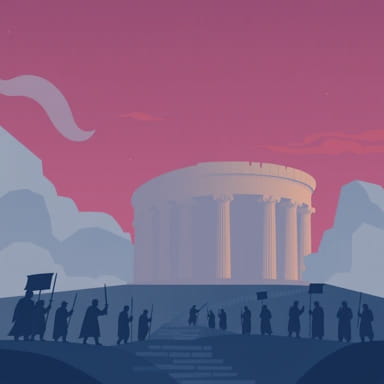
In the early 5th century, one of the most defining moments in Roman history occurred when the Visigoths attacked and sacked the city of Rome. This was not merely a military event, but a symbolic and psychological blow to a civilization that had dominated much of the known world for centuries. The sack of Rome in 410 AD by the Visigoths under the leadership of Alaric was the first time in 800 years that the city had fallen to a foreign enemy. This shocking event marked a turning point in the decline of the Western Roman Empire and is often studied for its cultural, political, and historical implications. Understanding why and how Rome was attacked by the Visigoths gives us a window into the crumbling of imperial power and the transformation of Europe.
Background: The Rise of the Visigoths
Who Were the Visigoths?
The Visigoths were one of the many Germanic tribes that had migrated into Roman territory during the late Roman Empire. Originally part of the larger Gothic group, they split from the Ostrogoths and established their own identity. The Visigoths had been both enemies and allies of Rome, at times serving as foederati (federated allies) who were granted land in exchange for military service.
Pressure from the Huns
In the late 4th century, the Huns swept across the steppes of Central Asia, displacing many Germanic tribes in their path. The Visigoths, in an attempt to escape the threat, appealed to the Eastern Roman Emperor Valens for asylum. They were allowed to settle south of the Danube River but were mistreated by Roman officials, leading to rebellion.
The Battle of Adrianople and Its Aftermath
The Gothic Victory
In 378 AD, the Visigoths defeated a Roman army at the Battle of Adrianople, killing Emperor Valens. This was one of the worst defeats in Roman history and exposed the empire’s vulnerability. Afterward, the Visigoths roamed the Balkans, demanding land and recognition. Eventually, a fragile peace was negotiated, but the relationship between the Goths and the Romans remained unstable.
The Rise of Alaric
Alaric, a talented Visigothic leader, emerged as a significant figure during this time. Having served in the Roman military, Alaric understood Roman tactics and politics. Frustrated by broken promises from the Roman government and eager to secure a homeland for his people, Alaric led his followers westward into Italy, targeting the heart of the Roman Empire Rome itself.
March Toward Rome
Demands and Negotiations
Alaric did not initially want to sack the city. His goal was to negotiate land and titles for his people. However, Roman officials repeatedly failed to meet his demands. The Western Roman Empire, weakened by internal strife and poor leadership, was unable to deal effectively with the situation. Emperor Honorius, based in Ravenna, was largely disconnected from the crisis in Rome.
Siege and Starvation
In 408 AD, Alaric laid siege to Rome. The city, once thought invincible, suffered famine and desperation. Although a ransom was paid to lift the siege temporarily, negotiations again failed. Alaric returned in 409 and even installed a puppet emperor, Attalus, to pressure Honorius. Eventually, after being betrayed and frustrated by continued refusals, Alaric lost patience.
The Sack of Rome in 410 AD
A Historic Breach
On August 24, 410 AD, the Visigoths entered Rome through the Salarian Gate, reportedly opened by sympathetic slaves. Over the course of three days, they looted the city, though accounts suggest that widespread destruction was limited. They respected many Christian sites, especially the churches of St. Peter and St. Paul.
Symbolic Devastation
While the physical damage may not have been total, the psychological impact was immense. Rome, the eternal city, the symbol of civilization and imperial power, had fallen. This event shocked the Roman world and deeply influenced Christian and pagan perspectives alike. For many, it signified divine punishment or the end of an era.
Consequences of the Sack
Impact on the Roman Empire
The sack of Rome did not cause the fall of the Western Roman Empire, but it was a clear indicator of its fragility. The empire continued to exist for several more decades, but the myth of Roman invincibility had been shattered. The central authority weakened, and local powers gained prominence.
Visigothic Migration
After the sack, Alaric intended to lead his people into North Africa, where he hoped to find fertile lands. However, he died shortly thereafter, and his successor, Ataulf, led the Visigoths into Gaul and eventually to Spain, where they established a lasting kingdom that would shape medieval European history.
Legacy and Historical Interpretation
Rome’s Changing Role
The fall of Rome to the Visigoths in 410 AD marked the transition from antiquity to the Middle Ages. While Rome remained a religious center, its political power continued to decline. The sack contributed to the perception that the old world was dying and a new order was emerging.
Christian Interpretations
Many early Christians saw the sack as divine retribution. However, theologians like St. Augustine wrote extensively to counter the narrative that Christianity had weakened Rome. His workThe City of Goddefended the faith and argued that earthly cities like Rome were temporary, while the city of God was eternal.
Modern Reflections
Historians today view the Visigothic sack not merely as a barbaric act but as part of the complex transformation of the Roman world. It highlights the interconnectedness between Rome and the so-called ‘barbarian’ tribes, many of whom had adopted Roman customs and Christianity. The Visigoths were not outsiders but former allies pushed to violence by neglect and broken promises.
The attack on Rome by the Visigoths in 410 AD remains one of the most memorable events in European history. It symbolized the weakening of imperial authority and ushered in a period of profound change. While Rome had faced threats before, this event marked the beginning of the end for the Western Roman Empire. It showed that internal instability, combined with external pressure, could topple even the most powerful civilization. Today, the sack of Rome stands as a reminder that empires are not immune to decay, and that even the strongest institutions can fall when they fail to adapt and uphold justice.