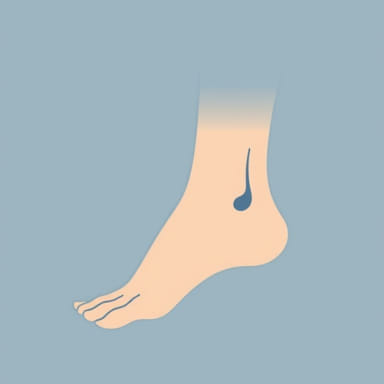
When observing the structure of the human ankle, one of the most noticeable features is the prominent bump located on the outer side. This bony protrusion is easily felt under the skin and often becomes a focal point in cases of ankle injuries or sprains. It plays a critical role in the anatomy and function of the lower leg and foot. Understanding the name of this bump, along with its structural purpose and clinical relevance, is essential for students of anatomy, healthcare professionals, athletes, and anyone curious about how the body supports movement and stability in the ankle region.
The Name of the Bump on the Outside of the Ankle
The noticeable bump on the outside of the ankle is called thelateral malleolus. This structure is the distal (lower) end of thefibula, one of the two long bones of the lower leg. The lateral malleolus forms the outer part of the ankle joint and serves as a key stabilizer for the ankle.
Anatomical Location
The lateral malleolus is located on the lateral (outer) side of the ankle, opposite themedial malleolus, which is the bump found on the inner side and formed by the tibia. Together, the lateral and medial malleoli create a deep socket known as theankle mortise, which securely holds the talus bone of the foot.
Structure of the Fibula and Lateral Malleolus
The fibula is the thinner of the two bones in the lower leg, with the tibia being the weight-bearing bone. Although the fibula contributes less to weight support, it is essential for ankle stability and muscle attachment.
- Fibula shaft: Long, slender part of the bone running parallel to the tibia
- Lateral malleolus: Expanded distal end that projects downward to form the ankle bump
The lateral malleolus extends slightly lower than the medial malleolus, providing lateral support and helping prevent excessive ankle inversion (inward rolling of the foot).
Ligaments Associated with the Lateral Malleolus
Several important ligaments attach to or near the lateral malleolus. These ligaments help stabilize the ankle and prevent dislocation or excessive movement.
Lateral Ligament Complex
- Anterior talofibular ligament (ATFL): Connects the fibula to the talus bone; commonly injured in ankle sprains
- Calcaneofibular ligament (CFL): Runs from the fibula to the calcaneus (heel bone); stabilizes the lateral ankle
- Posterior talofibular ligament (PTFL): Connects the posterior fibula to the talus; strongest of the three lateral ligaments
These ligaments are critical for preventing excessive movement that can lead to ankle injuries, especially during high-impact activities or uneven terrain navigation.
Function of the Lateral Malleolus
The lateral malleolus plays a variety of functional roles that contribute to lower limb mechanics and overall mobility.
Structural Support
By forming the outer part of the ankle mortise, the lateral malleolus helps cradle the talus bone, limiting side-to-side movement and stabilizing the ankle joint during walking, running, and jumping.
Muscle and Tendon Attachment
Several tendons pass around the lateral malleolus, including:
- Peroneus longus tendon
- Peroneus brevis tendon
These tendons aid in foot eversion (outward turning) and also assist in maintaining balance and ankle control during dynamic movement.
Common Conditions Involving the Lateral Malleolus
Due to its exposed position and crucial role in ankle stability, the lateral malleolus is prone to injury. These injuries can range from mild sprains to complex fractures.
Inversion Ankle Sprain
The most common ankle injury, particularly in sports, occurs when the foot rolls inward, overstretching or tearing the ligaments around the lateral malleolus. The anterior talofibular ligament is the most frequently affected.
Lateral Malleolus Fracture
A break in the fibula near the lateral malleolus can result from trauma, falls, or twisting injuries. Fractures may be classified as:
- Isolated fracture: Only the fibula is affected
- Bimalleolar fracture: Both the lateral and medial malleoli are fractured
- Trimalleolar fracture: Involves both malleoli and the posterior part of the tibia
Treatment depends on the severity of the fracture and may include casting, bracing, or surgical fixation.
Peroneal Tendonitis
Inflammation of the tendons passing behind the lateral malleolus, often due to overuse or ankle instability, may cause pain and swelling around the outer ankle. Proper footwear and strengthening exercises are essential for management.
Diagnosis and Imaging
When pain, swelling, or deformity is present near the lateral malleolus, diagnostic tools can help determine the extent of injury or condition.
Physical Examination
A clinician may assess tenderness, swelling, range of motion, and stability of the ankle joint to identify possible ligament tears or fractures.
Imaging Techniques
- X-ray: First-line imaging to identify fractures
- Ultrasound: Useful for evaluating soft tissue, including tendons and ligaments
- MRI: Provides detailed images of soft tissue damage and bone bruises
Proper imaging ensures accurate diagnosis and helps guide treatment plans to promote healing and restore function.
Rehabilitation and Recovery
Injuries involving the lateral malleolus require appropriate management to regain full ankle function and prevent chronic instability.
Rest and Immobilization
Initial treatment may involve rest, ice, compression, and elevation (RICE) along with bracing or casting to immobilize the ankle and reduce swelling.
Physical Therapy
- Range-of-motion exercises to prevent stiffness
- Strengthening of peroneal and supporting muscles
- Proprioceptive training to improve balance
Rehabilitation protocols vary depending on the severity of the injury but typically last several weeks to a few months.
Prevention of Lateral Malleolus Injuries
Preventive strategies are crucial for individuals who are physically active or have a history of ankle injuries.
Supportive Footwear
Wearing shoes that provide ankle support can reduce the risk of inversion sprains or lateral instability.
Strength and Stability Training
- Focus on strengthening the lower leg muscles, especially the peroneals and calf muscles
- Balance exercises using wobble boards or balance pads
- Proper warm-up and stretching before physical activity
Use of Ankle Braces
In high-risk sports or after injury recovery, wearing an ankle brace can help protect the lateral malleolus from reinjury and support joint stability during movement.
The noticeable bump on the outside of the ankle, known as the lateral malleolus, is more than just a surface landmark it is a critical structure for ankle stability, movement, and injury prevention. Formed by the fibula, it anchors ligaments, guides tendons, and forms part of the ankle joint that allows for efficient walking, running, and jumping. Whether in daily life, athletic performance, or medical care, understanding the anatomy and function of the lateral malleolus provides valuable insight into how our bodies maintain balance and movement through such a small yet significant part of the skeletal system.