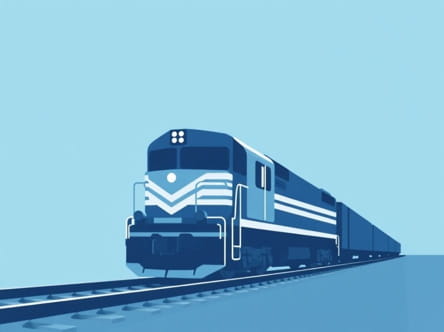
The creation of Conrail marked a major turning point in the history of American railroads. It was not the product of a single railway company, but a large consolidation effort driven by necessity. By the 1970s, the northeastern United States was witnessing the collapse of several major railroads. These failures were primarily due to declining freight revenues, rising operational costs, increased competition from trucks and airlines, and outdated infrastructure. The result was a major transportation crisis. In response, the U.S. government took a bold step by forming the Consolidated Rail Corporation commonly known as Conrail in 1976, merging together several bankrupt or struggling railroad companies into one unified system. Understanding which railroads were absorbed into Conrail helps illustrate not just economic history, but also the efforts to stabilize freight transport in a vital region of the country.
The Origins of Conrail
Conrail was officially established on April 1, 1976, under the Regional Rail Reorganization Act of 1973. Its creation was an unprecedented response to the massive bankruptcy filings of several major northeastern and midwestern railroad companies. These companies had once formed the backbone of the U.S. freight system but had become unsustainable due to changing industrial patterns and lack of modernization. Rather than allow the region’s transport networks to collapse completely, the government stepped in to create a federally backed, private-sector solution.
Key Railroads That Formed Conrail
At its inception, Conrail was composed of several bankrupt and financially distressed railroads. Below are the major railroads that were integrated to form the foundation of Conrail:
- Penn Central Transportation Company
- Erie Lackawanna Railway
- Reading Company
- Lehigh Valley Railroad
- Central Railroad of New Jersey
- Lehigh and Hudson River Railway
- Ann Arbor Railroad (later partially included)
Penn Central: The Largest Component
Perhaps the most significant and troubled contributor to Conrail was the Penn Central Transportation Company. Formed in 1968 from a merger of the Pennsylvania Railroad and the New York Central Railroad two of the largest and oldest railroads in the country Penn Central was expected to be a powerhouse. However, due to clashing corporate cultures, inefficiencies, and regulatory complications, it quickly became a financial disaster. It declared bankruptcy in 1970, just two years after its formation. This collapse was the largest corporate bankruptcy in the United States at the time, and it sent shockwaves through the national economy.
Erie Lackawanna Railway
The Erie Lackawanna was another key railroad absorbed into Conrail. It was formed from a 1960 merger of the Erie Railroad and the Delaware, Lackawanna and Western Railroad. Though it had a strong freight network and a presence in major northeastern cities, it could not survive the harsh economic conditions of the 1970s. It declared bankruptcy in 1972 and joined Conrail’s system in 1976. Its inclusion brought valuable routes and infrastructure into the growing Conrail network.
Reading Company
Another prominent railroad that joined Conrail was the Reading Company. Known for its long history dating back to the early 19th century, the Reading Railroad was a critical player in transporting anthracite coal from Pennsylvania to industrial centers. However, as coal demand declined and competition grew, the Reading Company struggled financially and eventually entered bankruptcy in 1971. Its rail lines were crucial to the region’s freight operations and were included in the Conrail consolidation.
Lehigh Valley Railroad
Operating primarily in Pennsylvania and New York, the Lehigh Valley Railroad was heavily dependent on coal traffic. Once a powerful regional carrier, it too fell on hard times as coal demand declined. After years of declining profitability and financial distress, it was absorbed into Conrail to help stabilize freight movement in the area.
Central Railroad of New Jersey
Also known as CNJ, the Central Railroad of New Jersey played an important role in New Jersey and eastern Pennsylvania’s transportation. It went bankrupt in 1967 and struggled to stay operational for nearly a decade. The inclusion of CNJ routes into Conrail added commuter and freight lines critical for urban and suburban transport.
Lehigh and Hudson River Railway
Although smaller than the other railroads mentioned, the Lehigh and Hudson River Railway provided valuable connection points between major rail lines. It declared bankruptcy in 1972 and was among the railroads included in the formation of Conrail. Its integration helped complete a more cohesive network.
The Federal Government’s Role
The U.S. government played a central role in organizing and financing Conrail. Initially, Conrail remained under heavy federal oversight through the United States Railway Association and later received significant investment to rehabilitate its deteriorating infrastructure. The government’s strategy was to create a streamlined and efficient freight system that could eventually return to private ownership.
Thanks to a mix of strategic management, deregulation via the Staggers Rail Act of 1980, and technological upgrades, Conrail began to turn a profit by the early 1980s. This success validated the federal intervention and set the stage for privatization.
Privatization and Legacy
Conrail was privatized in 1987, when it issued a public stock offering, marking one of the largest initial public offerings in U.S. history at that time. Its turnaround story became a symbol of how public-private collaboration could save critical infrastructure. Eventually, in 1999, Conrail was jointly acquired and split between Norfolk Southern Railway and CSX Transportation two of the major Class I railroads operating today.
Importance of Conrail’s Formation
The formation of Conrail was more than just a corporate merger; it was a lifeline for an essential part of the nation’s infrastructure. Without it, freight transportation in the northeastern United States might have collapsed entirely. By combining assets from multiple failing railroads, Conrail preserved critical supply chains, stabilized jobs, and allowed for modernization of rail freight systems in urban and industrial centers.
Conrail was born out of crisis, formed from the remains of iconic but struggling railroads like Penn Central, Erie Lackawanna, and Reading. These companies, once titans of the rail industry, had become symbols of a system in decline. Through federal intervention and careful planning, Conrail unified these fragmented lines and revitalized freight rail in the Northeast and Midwest. The story of the railroads that made up Conrail is a compelling chapter in American transportation history, showing how consolidation, innovation, and public support can reverse decline and build a stronger future.