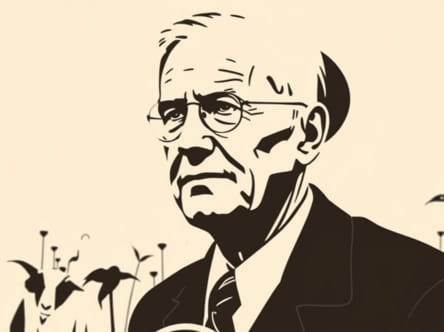
In the mid-20th century, as global populations surged and hunger threatened the lives of millions, a quiet revolution in agriculture began to unfold. At the heart of this transformation was Norman Borlaug, an American agronomist whose work would drastically reshape food production across the globe. His contributions to what is now known as the Green Revolution helped prevent massive famines and lifted countless people out of food insecurity. By developing high-yield crop varieties and promoting modern farming practices, Borlaug sparked a chain reaction that redefined agricultural productivity in the developing world.
The Origins of the Green Revolution
The Green Revolution refers to a period of rapid agricultural advancement that began in the 1940s and continued through the 1960s and 1970s. It was marked by the introduction of new technologies, synthetic fertilizers, irrigation systems, and, most significantly, high-yield crop varieties. This movement aimed to address global hunger by boosting food production, especially in regions where traditional farming methods were insufficient to feed growing populations.
Norman Borlaug’s Early Life and Education
Norman Borlaug was born in 1914 in Iowa, USA. He grew up on a farm, which gave him firsthand experience with the challenges of agricultural life. He later pursued a degree in forestry and plant pathology, earning a Ph.D. from the University of Minnesota. His strong foundation in plant science and his deep concern for food security guided his lifelong mission to improve crop yields in developing countries.
High-Yield Wheat: Borlaug’s Breakthrough
One of Borlaug’s most important contributions to the Green Revolution was the development of high-yield, disease-resistant wheat varieties. In the 1940s, he began working in Mexico under the Rockefeller Foundation’s agricultural program. At the time, Mexico was heavily reliant on wheat imports and faced frequent crop failures due to pests and diseases.
Borlaug’s work in Mexico involved cross-breeding wheat strains to develop varieties that were not only resistant to rust a common fungal disease but also had shorter stalks and higher grain output. These semi-dwarf wheat varieties could support the weight of larger heads of grain without falling over, which was a significant improvement over traditional wheat types.
The Role of Shuttle Breeding
Another key innovation Borlaug introduced was shuttle breeding. This method involved growing two generations of wheat per year in different geographic locations one in the lowland areas and another in the highlands. By doing this, he was able to speed up the breeding process and develop wheat strains that were adaptable to a variety of climates and growing conditions. This approach played a major role in increasing the pace of agricultural research and output.
Impact in Mexico and Beyond
By the mid-1950s, Borlaug’s wheat varieties had transformed Mexico from a wheat importer into a self-sufficient nation and eventually an exporter. This success attracted international attention and led to the expansion of similar agricultural programs in other parts of the world.
The Green Revolution in India and Pakistan
In the 1960s, India and Pakistan were facing severe food shortages and were heavily dependent on food aid. Both countries adopted Borlaug’s wheat varieties and modern farming practices, leading to dramatic increases in grain production within a few short years. Fields that once yielded less than one ton per hectare began producing more than four tons with the new technology and inputs.
- In India, wheat production doubled between 1965 and 1970.
- Pakistan saw similar gains, becoming self-sufficient in wheat production by the early 1970s.
These achievements were not just agricultural milestones; they represented life-saving advancements that prevented large-scale famines and social unrest in highly populated regions.
Training and Capacity Building
Borlaug recognized that improving crops was only part of the solution. He also emphasized training local scientists, extension workers, and farmers. Through programs like the International Maize and Wheat Improvement Center (CIMMYT), where he served for many years, Borlaug helped build research capacity in developing nations, ensuring the sustainability of the Green Revolution’s gains.
Focus on Smallholder Farmers
Although much of the Green Revolution’s impact was seen at the national level, Borlaug’s work also reached smallholder farmers. By making seeds and knowledge accessible, and by promoting policies that supported fertilizer subsidies and irrigation, many rural farmers were able to boost their yields and incomes. In many cases, this led to improvements in education, healthcare access, and general living standards for farming communities.
Global Recognition and Awards
For his monumental contributions to fighting world hunger, Norman Borlaug received numerous awards. The most notable was the Nobel Peace Prize in 1970. The Nobel Committee recognized that peace is not only about the absence of war, but also the presence of food security. Borlaug’s efforts to combat hunger were thus seen as crucial to global stability.
He also received the Presidential Medal of Freedom, the Congressional Gold Medal, and was awarded the Padma Vibhushan, India’s second-highest civilian honor. These accolades reflected the international appreciation for his work and the lives he helped save through scientific innovation and persistence.
Legacy and Continuing Influence
Even after his retirement, Borlaug continued to be an advocate for science-based agriculture. He promoted biotechnology, such as genetically modified crops, as tools to meet the ongoing challenges of food insecurity and population growth. He was also a strong supporter of the World Food Prize, which he helped establish in 1986 to honor individuals who make outstanding contributions to improving the quality and availability of food worldwide.
Challenges and Criticisms
While the Green Revolution had undeniable successes, it also faced criticism. Some argued that it led to environmental degradation due to overuse of chemical fertilizers and water resources. Others pointed out that its benefits were not evenly distributed, with wealthier farmers often gaining more than poorer ones.
Borlaug acknowledged these issues but maintained that the alternative widespread famine was far worse. He believed that with careful planning, environmental concerns could be addressed without sacrificing productivity. His vision was one of balance: feeding the world while preserving the earth.
A Lasting Contribution to Humanity
Norman Borlaug’s contributions to the Green Revolution reshaped modern agriculture and saved millions from starvation. Through his relentless work on high-yield wheat, his innovations in plant breeding, and his advocacy for scientific farming methods, he left an indelible mark on global food systems. Though challenges in agriculture continue, Borlaug’s legacy remains a powerful reminder of how science, determination, and compassion can come together to solve humanity’s greatest problems. His story is not just one of scientific achievement, but of hope and the enduring belief that hunger can be defeated.